Showing posts with label weird. Show all posts

Wednesday, 22 August 2012

Cool Startups - PitchPhone.Com Review

Hot Tips - The Best Free Business Tool You (Probably) Don't Know About.


https://www.pitchphone.com/

If you're not bootstrapping a startup, chances are you'll have to secure funding for it. Securing funding can equate to two-minute elevator pitches that can either make or break your chances of clinching that much-needed capital.

Imagine yourself working day in and day out for months on end, maybe even years, to perfect your product. You know everything about it, the inside, the outside. Even in your half-awake state, you know how it looks like, what it's all about, what good it brings to your target consumer. You know darn well that when somebody asks you questions, you'll be able to beautifully satisfy everything this person needs to know about your product. You apply for VC funding, and then the big day comes. But for some reason beyond eloquence, you stammer and falter while delivering your pitch. The person you're speaking with at the other end of the line hangs up on you. With sagging shoulders, you admit defeat, wondering to yourself what the heck went wrong.

If this scenario sounds familiar, maybe what you need is practice.

PitchPhone is the brainchild of the same guy behind DidThis and Addy, Francis Dierick. Last year, Dierick quit his job to focus his attention on startups. PitchPhone is a service that allows you to practice your pitches over the phone in one of two ways: call PitchPhone and answer the question it throws at you or have PitchPhone call you randomly throughout the day to inquire about your startup. Each time, you're given 30 seconds to answer.

According to Dierick, while planning to apply with Y Combinator for DidThis, the idea for PitchPhone came to being. He needed a tool to help him practice with his pitches. Initially, he created an iPhone app containing 100 startup questions. Soon, he realized that an app alone couldn't help him develop pitching practice into a habit. As a result, he created the PitchPhone hotline, which has been programmed with 100 tough questions about your startup. PitchPhone currently works within the U.S. only.

At the moment, the service is free for the first 1,000 inbound calls. And for $4.99 per month, PitchPhone is available to those who want to automatically receive calls throughout the day. Dierick is working on adding toll-free numbers, international support and improved overall support and voice quality for call recording.

If you're ready to practice that pitch, the PitchPhone hotline can be reached at +1 (209) 215-2160.

[Via - Bitrix24.de]

Wacky Startups - StarToiletPaper.Com

Cool Apps - SeeMail Review

PickyDomains - startup that caught everyone by surprise

The (Evergrowing) List Of Cool Bootstrapping Sites

From 0 To $30,000 A Month With Dropshipping

My Name Is Beer, Mr.Beer

Off the Books: The Underground Economy of the Urban Poor

How I Increased Sales 350% With Press-Release

Daily Advice Link - Free Logo Service


Sunday, 19 August 2012

Wacky Business - Toilet Paper Ads

Hot Tips - The Best Free Business Tool You (Probably) Don't Know About.


http://www.startoiletpaper.com/

Duke sophomore Bryan Silverman, a finalist to become Entrepreneur Magazine's "College Entrepreneur of 2012," can tell you the many jokes he's heard about his newly launched business.

"People say 'what a crappy idea' and things like that" when he offers to advertise their businesses on rolls of toilet paper. "But once they get through cracking jokes, they usually love it."

Yes, that's correct: Advertising on toilet paper. Silverman and his brother Jordan have convinced restaurants, a bowling alley, a car wash and others to do just that on rolls of bathroom tissue, which they are offering for free to venues that would otherwise have to pay to supply their restroom stalls. The brothers hire a manufacturer to print the ads with a soybean-based ink, which they've tested for safety.

No, the ink doesn't smear when the paper is used.

Jordan dreamed up the idea when sitting, appropriately enough, on a toilet seat wishing he had something to read. When he told his younger brother about it, "at first, I pooh-poohed it," Bryan jokes in a video where he describes why his idea should be honored as the year’s best among entrepreneurial U.S. college students.

"Our printed toilet paper allows you to reach a targeted audience in a unique way that will certainly catch people's attention," says the website for their new company, Star Toilet Paper. "Ads and coupons on toilet paper provide customers with a convenient and fun way to talk about and learn more about your company."

Several of the first advertisers have included QR codes, or bar codes, that users can scan from inside their stalls to capture a coupon and learn more about the advertiser. Potentially spending minutes instead of seconds with ads that cost about half a cent each, they comprise “an unmatched captive audience,” Bryan says. "We're offering them amazing deals while they're sitting on the toilet. If they don't want to read it, they don't have to."

The brothers have been handling all aspects of their business, "from sales to social media," although they hope to hire at least one employee soon. They've printed 3,000 rolls of toilet paper so far and plan to produce different versions for men and women, thereby helping advertisers target their audiences.

A neuroscience major from Rye Brook, N.Y., Bryan only recently became part of Duke's entrepreneurship scene, in which growing numbers of students have begun joining startups or launching their own businesses. Now, he says, "I'm looking to take business classes, entrepreneurship classes, anything along those lines."

He and Jordan, who graduated in May from the University of Michigan, are "definitely trying to make this more than just an idea and grow it into a business," Bryan says.

They're still testing their concept with both advertisers and users, but have dreams of becoming "major players" in the commercial toilet paper industry. "We're hoping to supply anything from a mall to a stadium," Bryan says.

[Via - Duke Today]

Cool Apps - SeeMail Review

PickyDomains - startup that caught everyone by surprise

The Coolest Facebook Business Tool You Probably Never Heard About

The (Evergrowing) List Of Cool Bootstrapping Sites

From 0 To $30,000 A Month With Dropshipping

My Name Is Beer, Mr.Beer

Lifehacks - Convert Reward Points On Your Card To Dollars In Your PayPal Account

Off the Books: The Underground Economy of the Urban Poor

Cool Apps - Nexercise

Daily Advice Link - Free Logo Service


Tuesday, 24 July 2012

Niche Biz - Danger Artist

Hot Tips - The Best Free Business Tool You Don't Know About.


http://www.tonyakay.com/

When Tonya Kay performs her “fire pasties” routine this Wednesday at TRiP in Santa Monica, Calif., as part of the bar’s weekly burlesque show (doors open at 8pm, $10 cover), she’s almost positive her breasts won’t blow up this time.

It took a few performances to get it right. The first time she tried it, she says, she used 70 percent rubbing alcohol, and her pasties burned out “as soon as I started shaking.” She had to re-light her breasts several times during the act, which the audience enjoyed but she found “cheesy.” The second time, she used something a little stronger: lighter fluid. “The difference between 70 percent rubbing alcohol and lighter fluid is massive,” Kay says. “I had flames coming off … that were so huge, everyone in the first few rows had to duck.” She ended up with a blister burn on her stomach that left a scar—a permanent reminder of just how perilous her profession really is.

She eventually learned that the best way to set your breasts on fire is with 100 percent rubbing alcohol. “They light well and they stay lit without engulfing the whole stage in flames,” she says. Even so, if you’re in Los Angeles this week and decide to check out her show, you might want to watch from the back.

Fiery breasts aren’t the only risky spectacle in Kay’s performance repertoire. She’s also a whip cracker, a knife-throwing target, a stilt dancer, a balloon swallower, and a grinder girl, which involves making sparks on a metal bikini with an angle grinder. Her highly specialized field is such a niche that she had to invent a name for it. She calls it “Danger Arts.” And that’s not self-aggrandizement. It’s truth in advertising.

Take stilt dancing, which she performed most recently on last week’s NBC music contest, The Voice. “You could break your knees pretty easily,” Kay says. “And if you fell or slipped, it’s very possible that you could break your neck and die.” But the stunt most likely to “screw up my future,” she says, is the grinder-girl act. The blades on an angle grinder are designed to cut through metal, and although the deadly blades only make contact with her metal bikini during the act, they come frighteningly close to unprotected skin. “There’s major arteries all through the inner thigh,” she says. “One slip and you could grind through flesh and bone pretty easily and quickly.” She knows at least two former grinder girls who did just that and ended up being taken away in ambulances.

Which explains why she rarely has to audition anymore. There’s just not much competition out there. “When some choreographer or producer decides that they need a grinder girl act, they’ll call the agents,” she says. “And the agents will put out a casting call, ‘We need grinder girls.’ And two of us will show up.” She’s essentially cornered the market on putting her life in mortal danger for entertainment. And business has been good. Over the past decade, she’s performed everywhere, from TV shows like America’s Got Talent and the History Channel’s More Extreme Marksmen to touring the country for three years with STOMP, the percussion and dance troupe. She’s been used for knife target practice on the Tonight Show and cracked a flaming bullwhip during a special post-Super Bowl episode of Glee.

She’s learned two important lessons during her decade-long career in the danger arts. No 1: Never imbibe before the final curtain. “Free drinks is one of the perks of performing at bars,” she says. “But that’s how you end up in the emergency room.” Second, show the audience your fear, even if you’re not afraid. “An audience doesn’t want to see an effortless, safe production,” she says. “They want to believe there’s a chance that somebody could get hurt.”

Which isn’t a difficult emotion to convey, because it turns out there really is a chance that somebody could get hurt. Even when all precautions are taken to make her act as safe as possible, you just never know when one of Kay’s breasts is going to burst into flames.

[Via - BusinessWeek.Com]

Smart Marketing - LanderApp Review

Lifehacks - Convert Reward Points On Your Card To Dollars In Your PayPal Account

Off the Books: The Underground Economy of the Urban Poor

PickyDomains - startup that caught everyone by surprise

The Coolest Facebook Business Tool You Probably Never Heard About

The (Evergrowing) List Of Cool Bootstrapping Sites

From 0 To $30,000 A Month With Dropshipping

My Name Is Beer, Mr.Beer

Daily Advice Link - How I Increased Sales 350% With Press-Release

Sunday, 15 July 2012

Weird Businesses - The Snuggery

BizHacks - free social intranet for small businesses


http://www.thesnuggery.org/

Never underestimate the power of the human touch.

At least, that's the business model that Penfield, N.Y. woman Jackie Samuel is banking on. About a month ago, she launched a business offering a solid hour of cuddle time in exchange for a cool $60.

"I really just wanted to cuddle," Samuel told Metro.

On her site, The Snuggery, Samuel showcases herself as an advocate for the healing power of touch. With photos that show her in cozy, curled up poses dressed in pajamas, Samuel states that Americans are deprived of non-sexual touch and that's why she is here to help.

Samuel said she has looked into getting certified for her snuggle sessions, but found that the only certification available was for people looking to host group snuggling parties. Samuel just wanted to do individual cuddling. When she placed an ad for her snuggle services in the back of her local newspaper, business started to flow.

"There are different kinds of cuddling positions, but I typically always start out spooning and I am pretty small, so usually I'm the little spoon," Samuel said.

She also offers a 45-minute session for $50, and 90 minutes of cuddling for $90. While she has gotten some inquiries from snuggle-seekers looking for a little extra affection, Samuel said the majority of her clients (all men, though she is willing to cuddle with women, too) respect her boundaries and are just looking to get cozy.

"I think a lot of people don’t have someone in their life that they can receive comforting touch from on a regular basis," Samuel explained.

[Via - Metro]

Wahooly.Com Review

Coupon reselling site makes millions

The Coolest Facebook Business Tool You Probably Never Heard About

The (Evergrowing) List Of Cool Bootstrapping Sites

From 0 To $30,000 A Month With Dropshipping

10 Great Books About Underground Economy, Working Under The Table And Surviving When Economy Sucks

101 Businesses You Can Start With Less Than One Thousand Dollars: For Stay-at-Home Moms and Dads

My Name Is Beer, Mr.Beer

Daily Advice Link - How I Increased Sales 350% With Press-Releases

Sunday, 10 June 2012

Meet Donuts.Co - New Startup That Raised $100 Million And Applied For 307 TLDs


http://www.donuts.co/

"The existing spaces (like .com) are saturated." Daniel Schindler, Donuts co-founder is spot on. As per the WHOIS database, millions and millions of top-level domains have been registered to date - .com, .net, .info, .org. - that a good number of people are having a difficult time coming up with a domain that hasn't been registered yet.

It is for this reason that the idea of expanding Internet addresses beyond the aforementioned extensions to basically just about anything imaginable came to being, and Donuts, a web registry established in 2011, is hoping to cash in on the opportunity. As of this writing, Donuts is aiming to own and operate 307 new "dot-brand" extensions.

Aside from Donuts, hundreds of other companies have applied with the ICANN for new generic top-level domains (gTLDs), and the complete list of applications, along with the proposed domains, will be made known on June 13.

When Donuts started operations last year, right out of the gate, it had been very vocal about its intentions to take advantage of this opportunity. Starting with 3,000 potential domains in its list, through its proprietary method of valuing gTLDs, the company was able to narrow it down to 307, which, by most standards, is still a lot.

Donuts and other applicants are keeping their lips sealed about any specific domains for competitive reason. As of May 30, ICANN revealed it has received roughly 1,900 applications. Each domain application is estimated to cost about $185,000, meaning, Donuts had to pay $56.8 million for those on its list. In any case multiple applicants had to battle for the same domain, the name goes to auction, which could mean millions more in expenses for the winning bidder.

Schindler, however, isn't concerned. According to him, access to money isn't going to be a problem. Well, given that the guy has raised more than $100 million from investors, he has every reason to say that.


[Via - PickyDomains.com]

29 Bootstrapping Tips

In-Depth Startup Profiles - Chegg.Com

From 0 To $30,000 A Month With Dropshipping

Unusual Business Ideas - SleepTracker

How I Increased Sales 350% With Press-Release

Bootstrapping 101: Tips to Build Your business with Limited Cash and Free Outside Help

Bootstrapping101 - Bitrix24.Com

Need To Make A Quick Buck? Copy This Post!

Daily Advice Link - Free Logo Service

Saturday, 9 June 2012

Bootstrap This - 29+ Sites That Help You Save Money

1. Bitrix24.com - Free CRM, planner, project manager, document sharing (limited to 12 employees)

2. PickyDomains.com - Pay per result naming service, $50 for domain/name/product line, slogan.

3. Reddit/Freebies - Community moderated daily updated freebies list.

4. AppSumo.com - Groupon clone for buying enterprise software.

5. JetRadar.com - Low airfare meta searchengine (searches through 700+ airlines to find best deals normally available through direct purchase on airline sites only).

6. SideJobTrack.com - Free invoicing.

7. MoneyBookers.Com (Skrill) - PayPal alternative, cheap way to accept online payments/credit cards (25 cents + 3%, please refer to site for exact details)

8. Kodesk.com - Office sharing. You can both buy and sell extra office space, including by the hour.

9. PRLog.com - Free press-release distribution.

10. InternMatch.com - Own slaves legally.

11. RetailMeNot.Com - Discount coupons, business section available.

12. OpenOffice.Org - Free MS Office alternative.

13. WaveAccounting.com - Free online accounting SaaS

14. SysAid.com - Free helpdesk software. ZenDesk.com is worth paying for.

15. CouchSurfing.com - Yes, I do want to let complete stranges sleep in my house for free (so I can do the same when I travel).

16. SubmitYourStartup.Com - Partly outdated list of sites that accept startup submissions.

17. Vator.Tv - Social network for startups

18. LowerMyBills.com - Loan/Insurance/Internet Provider/Phone Carries comparison service.

19. Score.Org - Free consulting from retired entrepreneurs (available in certain areas only).

20. Logaster.com - Free logos. Bad English gratis.

21. 99Designs.com - Cheaper alternative for design work. Designers hate the site, so it must be good.

22. MinuteBox.com - Hire doctor/lawyer/coffee enema expert - pay by the minute. Lots of experts, typical pay is around $2.50 a minute. Not sure, but there's probably some sort of minimum required.

23. HelpAReporter.Com - Free publicity (pitch your business directly to journos working on certain stories).

24. AVG - Free antivirus.

25. Weebly.Com - Free website creator.

26. GotFreeFax.com - Send free fax online. Limited to 3 pages, US and Canada only.

27. RememberTheMilk.com - Free To-Do list, iPhone and Android support.

28. Zamzar.com - Free online file converter. Let's pass a law that mandates that only one extension (how does .file sound) is allowed!

29. Join.Me - Free webcast/webconference SaaS.

P.S. I have not included eBay, Skype, etc. since everybody knows about those. Did I miss something? Send me a message.

Saturday, 2 June 2012

Making Money In Your Sleep. Almost - SleepTracker.Com Story

Daily Advice Link - Free Logo Service


http://www.sleeptracker.com/

Late one night about 15 years ago, Lee Loree noticed his wife holding a perfectly lucid conversation in her sleep. That observation started the then-stock analyst on wondering about sleep patterns, talking to engineers, and then soliciting money from angel investors to build a device to improve how we sleep.

The result is the SleepTracker, a watch-like monitor and alarm that users wear on their wrists to record their sleep patterns and awaken them at an optimal time within the window they have chosen. The alarm goes off when the lightest sleep stage is reached during that window, reducing early morning grogginess. The monitor also records sleep stages throughout the night, converting it into data that can be analyzed over time with tracking software.

Loree, 39, has sold more than 250,000 units in 35 countries but still runs his $3 million Innovative Sleep Solutions as a one-person business from his Atlanta home. I spoke to him recently about the startup process and why he deliberately keeps his company small; edited excerpts of our conversation follow.

You were working in finance in 1998, with no background as an inventor or a sleep scientist, when you came up with SleepTracker. How did you do it?

I started checking books out at the public library. I spent 20 or 30 nights sitting in a closet, watching my wife sleep, which is pretty creepy when you think about it. I had access to a lot of smart people through my networks, so I met with them and eventually found a micro-electrical engineer and a software programmer to write the code. We built a couple generations of prototypes, which I financed by withdrawing money from my retirement accounts. When we had north of $100,000 invested, people told me I was a fool—and rightly so.

I was still working at a bank at the time, and I ran out of funds. So I wrote a business plan and did a mini-roadshow, meeting with angel investors. I went with an angel who had business experience and could help me navigate the startup. He turned into a pretty good shepherd. He’s still involved with the company; we talk quarterly.

You got the product to market in 2005. What was the reaction?

We sat and stared at our website that first day and we had 38 visitors. We didn’t have any sales. The next day, a tech blog found us and they threw up a screenshot of our website. Our business went crazy. It was like a commercial where people are watching one sale, then another, then five, then 30, and everybody starts freaking out.

I had conservative projections in my business plan, with 1,000 sales expected in the first year and 5,000 in the second year. Well, we sold 5,800 pieces in the first nine months and 12,000 the next year. We were cash-flow-positive in the first month. We scrambled to support various browsers and add an international component to our shopping cart. The product blew away all expectations that I ever had.

Your product was an early innovation but now you have competitors. Does that concern you?

I believe competition is inevitable, so you use it to your advantage. More people advertising in this space, doing interviews, doing marketing—it should grow the pie, assuming you have a product that works and is fairly priced.

A lot of our competitors have gone out and raised significant amounts of money. They have employees; they have infrastructure. Meanwhile, we have this quiet little business, we haven’t had to get additional outside investment, we have built up a significant war chest, and we don’t even carry a line of credit. We run the business debt-free and it’s clipping along.

Do you think about growing into a larger organization?

We found a sweet spot: Our business grows 10 to 20 percent annually, which is real manageable, and we are where we want to be in terms of managing cash flow. We have all the infrastructure: a call center, fulfillment center, manufacturers, warehouses—but none of them work for me. My main goal with this company was flexibility with my lifestyle. I wanted to be a dad and a husband and be there to be a part of things with my family. If I had the ambition to have a bigger company, we could scale this business up and do 500,000 pieces a year, I don’t have any doubt about that.

But using contractors, rather than employees, works for me because when we’ve fulfilled that obligation, I can turn off that expense and turn it back on when I need it. They like it also because it gives them the flexibility to pursue other contracts. And I don’t have to deal with 401(k)s, or kids being sick and people being out of the office.

How did you set up distribution?

You can get the product online at places like Amazon and Costco and in a few very specific brick-and-mortar stores. There really is not a great channel in the U.S. for these types of devices. We’ve been in specialty catalogs but we’ve not found that to be particularly productive. Some of the big box retailers that used to dedicate a lot of space to CDs and video games have gotten crushed because people are streaming that stuff now. So they’re piloting different things in that dead space, but we struggle to think that’s a good plan for us. No one is going to Best Buy to pick up a sleep monitor.

In Europe, Mexico, and Asia, we have a much bigger footprint. There are limited resources in a small business and I’ve spent much of my time trying to grow international sales.

About half of your revenues now come from sales overseas. How do you manage those markets?

We sell to 30 independent distributors, some of whom I found in our first month of operations and [who] are still with us today. We get them the product, plus camera-ready art, and I do media interviews all over the world. Of 30 distributors, 20 of them I’ve never met face-to-face. Bidding jobs to people, regardless of where they live or what they look like, has worked for me from day one in this business and I believe in it.

You are still selling the same basic product you started with in 2005. Have you got any innovations in the works?

We’re on our fourth or fifth iteration at this point, but we’re kind of a one-trick pony. I recognize that for the long term, we want to have multiple legs so we have more stability, but I’m not sure how to make it a whole lot better. It’s really hard—when you have a business that makes money—to change your focus. We are working on some innovations; by the first of the year we should have a feel for their potential and timelines. But we’ve done this before and the ideas all peter out. Sometimes we’ve spent $10,000 to $40,000 before walking away. I have a proven product, so I try not to monkey too much with it at this point.

[Via - BusinessWeek.Com]

From 0 To $30,000 A Month With Dropshipping

Service Startups - Logaster.Com

How I Increased Sales 350% With Press-Release

Bootstrapping 101: Tips to Build Your business with Limited Cash and Free Outside Help

Media Startups - MP3Mixx.Com

Bootstrapping101 - Bitrix24.Com

Love Saving? You'll Love These Seven Sites.

Need To Make A Quick Buck? Copy This Post!

Startup Profiles - PrintLuna

Daily advice link - Freelancer? We are hiring!

Sunday, 27 May 2012

Cool Inventions - Meyer Sound Laboratory

Daily advice link - Freelancer? We are hiring!


http://www.meyersound.com/

A recent Zagat survey reports that more than the lousy service, what turns most diners away from a restaurant is the noise. There are plenty of possible workarounds to this, of course – curtains, carpets and other acoustically gentle materials. However, the sound level within a restaurant still rises and falls depending on the number of patrons. Or more aptly, the crowd’s state of rowdiness and the number of wine bottles they’ve already consumed.

Using state-of-the-art technology usually reserved for recording studios and concert halls, Meyer Sound Laboratories, a Berkeley, California-based audio engineering firm, has come up with a solution to the problem. Through a combination of recording equipment, acoustic materials and an iPad, controlling the sound inside a restaurant – loud on a Friday night or quiet on a Sunday afternoon, it’s up to you – can be as simple as the swipe of a finger.

Speakers, microphones and subwoofers are installed inside the restaurant, plus sound-absorbing fabrics that can be as weird as recycled jeans or as aesthetically appealing as a painting canvas. Microphones capture the sound, which then is sent to a digital processor. The processor, in turn, allows somebody – the restaurant owner maybe – to fine-tune the sound via the iPad.

The system was recently tested at Comal, a Mexican restaurant run by John Paluska, former Phish manager. The San Francisco Chronicle reported Paluska as saying, “As a person who loves to eat out and as someone who reads the restaurant press, I know that noise is a hot-button issue for everyone. What we wanted to achieve is often mutually exclusive. Either you have a conversational ambiance or a buzzy ambiance. What we’re excited about is that we’re achieving both."

[Via - MadConomist.com]

How One Man Launched A Mobile Gaming App From Apartment That Brings In $200,000 A Month

Odd Jobs: How to Have Fun and Make Money in a Bad Economy

From 0 To $30,000 A Month With Dropshipping

Mommy Biz - Margaret Josephs And The Macbeth Collection

Profiting From Human Irrationality. 10 Must Read Books

TalkDesk Review

Subscription Based Startups - Citrus Lane

Youtube Downloader

LifeHacks - How To Use Bitrix24.Com As A Free CRM, Intranet And Task Manager.

Friday, 25 May 2012

Odd Jobs: How to Have Fun and Make Money in a Bad Economy

Holy cow alert - From 0 To $30,000 A Month With Dropshipping


We've covered all kinds fo business ideas - from strange (like making money by suggesting domains for other people) to outright bizzare (Shoot Your Loved One). Lately, we've been covering a lot of 'regular' startups - from very promising looking JetRadar.com, to the rising star of corporate social intranets Bitrix24.com

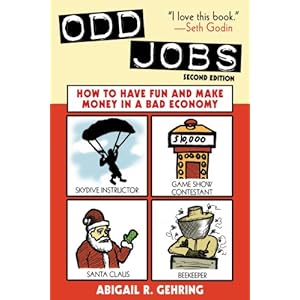
But since reading, writing and sharing about highly unusual business ideas is a never-dying passion for us, we are more than happy to pass the news about Odd Jobs: How to Have Fun and Make Money in a Bad Economy , a really cool book written by Abigail R. Gehring that got thumbs up from Seth Godin himself.

Abigail is isn't your regular business book author. Rather she is the editor of Back to Basics (an Amazon.Com best seller), Homesteading, and Self-Sufficiency, and author of Odd Jobs and Dangerous Jobs. She’s practiced living self-sufficiently since her childhood in Vermont, being home-schooled, home-canning jams and jellies, and enjoying natural crafts.

So this book isn't about getting rich, but rather about how to make decent income and have fun during this challenging economic environment (which frequently involves having muliple side gigs). I don't think the book is available in libraries yet, so grab your Kindle and get reading!

Profiting From Human Irrationality. 10 Must Read Books

TalkDesk Review

Subscription Based Startups - Citrus Lane

New Free App Helps Business Owners Predict Sales Depending On Weather Forecasts

How’s That For A Crazy Business Idea (Salvador Dali Watch)?

Bootstrapping 101: Tips to Build Your business with Limited Cash and Free Outside Help

Moms Making Millions - Melody Hsieh/Mobo Cruiser

Link of the day - If You Sell Links On Your Site, I Will Buy Them Off You

Thursday, 10 May 2012

Fame.Me Aspires To Become Net's American Idol

Daily Advice Link - Free Logo Service


http://www.fame.me/

Imagine American Idol on Facebook. Yes, not on TV, but on Facebook. Further still, imagine American Idol without Jennifer Lopez, Randy Jackson and Steve Tyler, but just the American population spotting the next big singing sensation.

Impossible? Not quite.

Brett Marl of Fame.Me is looking to up the game by bringing a contest like American Idol to the Facebook generation, more like turning an interactive TV show into an even more interactive, accessible website. If that sounds a lot like YouTube to you, consider this: 60 hours of video is uploaded into YouTube every minute of the day so that getting spotted in a crowd like that is like finding a needle in a haystack – but probably not if you're a kitten or an adorable baby with a toothless grin.

FameMe is structured like a contest. The judges are people at home, sitting in front of their computers, with three chances to vote for their favorite performers dai ly. FameMe makes full use of existing social media, Facebook and probably Twitter in the future, for both contestants and supporters to campaign for votes.

Fame.Me is only four months old, but Marl and his team are confident the site will be the next big thing.

[HT - Unusual Business]

The Mom And Pop Business - Successful Parenting Startups To Watch

How I Increased Sales 350% With Press-Releases

From Police Work To Sauerkraut - Tim Forrest Story

Bootstrapping 101: Tips to Build Your business with Limited Cash and Free Outside Help

From 0 To $30,000 A Month With Dropshipping

Will HubSpot Rewrite The Rules Of Marketing?

Live And Learn - Google Documentaries

Sunday, 29 April 2012

Making Money Writing

Need Perfect Software Name? Try Crowdsourcing.


http://www.thisistrue.com/

Randy Cassingham is one of the first online publishers: his This is True column went online in 1994. It's his full-time gig: over the years, it has brought him several million dollars in income, and he lives on 45 acres in western Colorado, where he looks at gorgeous snow-covered mountains from his home office.

"TRUE" (as Cassingham calls it) is biting social commentary, using weird news as its vehicle. It's funny and has a loyal following: thousands pay $24/year to get the full column by e-mail each week. Tens of thousands get a free sampler. It might be the first example of an online "fremium" business model. In the early years, he turned down two unsolicited syndication deals to bring the column to newspapers -- turning them down because he didn't want to give up control of his work, he says.

Good move: now he's compiling his archives into Kindle books, where he can get a 70% royalty on sales, rather than the 12.5% that Dutton (part of the Penguin Group) pays him when it turned another of his websites into a book.

And it's working: Cassingham told me that in the first two weeks of Kindle book sales, the five volumes he has posted so far earned more than $1,400 in royalties from Amazon. "I'm boggled," he told me by e-mail. "Imagine if I actually concentrated on this income pillar. Or had more than five books available. Or I sent one or more titles out for review somewhere, or advertised, or did ANY kind of promotion to anyone other than my existing readers!"

Imagine indeed!

Then he realized that a throw-away human interest feature he includes in This is True, the "Honorary Unsubscribe" of someone who died in the previous week, could also be good book material.

"These are the people you wish you had known," he says. "Take the inventors I've featured. Did you know the same guy invented both the computer hard drive and the video cassette? What a fascinating guy!" He has also featured the inventors of the contact lens, the hovercraft, the Hawaiian shirt, even the guy who thought of putting a peanut inside an M&M. Then, he says, getting excited as he looks through his archive, "there are the medical researchers, responsible for saving thousands, even millions of lives, spectacular entertainers that died virtually forgotten, and..." Just as he says: the kind of people you wish you had known.

That book just came out on Amazon's Kindle this week, and it's the first of several in that series. Cassingham told me that "I'm glad I have a block of 100 ISBNs" -- International Standard Book Numbers, which are used to identify books for retailers, including Amazon -- "I'm going to need them."

Cassingham used to have the material now coming out in his books available free in various web archives. He counted on Google's Adsense program to bring in ad money, but it hasn't worked as well as he had hoped, even though it's all original work. "TRUE's archive," he admitted, "which had more than five volumes of material, only brought in $559 for the entirety of 2011." Compared to more than $1400 in the first two weeks on Amazon, it's no wonder Cassingham is starting to take the archives down. If someone follows a link to an archive page that has been removed, they now see information on what book it's in -- with a link to its Amazon sales page.

Another good example of unorthodox ways of making money writing is crowdsource naming.

[Via - HuffPost.com]

Free Logo Services Review

From 0 To $30,000 A Month With Dropshipping

Man petitions the U.S. Patent and Trademark Office to get Google trademarks canceled

Smart Inventions - Salinity Monitor Spoon

Designer? We Are Hiring!

New Startup Pays Experts To Answer Questions

Cool Apps - EggDrop

Daily advice link - Freelancer? We are hiring!

Monday, 23 April 2012

How I Turned Hobby Into A Thriving Crowdsourcing Business. Part 2.

Book of the day - The Million-Dollar Idea in Everyone: Easy New Ways to Make Money from Your Interests, Insights, and Inventions


Part 1 here

No matter how big your ‘blog network’ is (most likely you don’t have one at all), sooner or later you have to get publicity from blogs that you don’t control. So this part is going to be about how I got free publicity for PickyDomains.com from other people’s blogs.

If you want other bloggers to write about you, the number one tool is Technorati. It was absolutely indispensible to me when I started promoting PickyDomains.com in 2007. Essentially Technorati tracks only blogs and news sites, it ranks them according to popularity and divides into different a categories. For example, there is a section of over 30,000 blogs and news sites that cover technology, which was a good fit for me. There is also section for small business with 20,000+ blogs, which was also a great fit for our risk-free naming business. Most popular sites are listed first, but more than likely, you won’t get any response from the Top 100 blogs. Whatever your new startup is about, with Technorati you can find a group of blogs and news sites that cover your industry.

The next step is to contact blog owner. Bloggers are bombarded with e-mails daily, so if you send them your press-release, this will only piss them off (I’ll have a section about how I do press-releases with great results). And ‘Hey, you might want to write about my new startup’ won’t work either.

Since I was a total noob, at first I simply explained my situation to bloggers I contacted – that I started a company and had no clue how to market it. However silly this approach might have been, it worked surprisingly well – John Dvorak of Dvorak.org, for instance, was happy to help me out.

Then I changed my approach completely. Instead of ASKING for something, I started OFFERING something for free. I would write a short e-mail that would read along these lines

‘Hi John!
I really enjoy your blog. I recently started a new company called PickyDomains.com – it’s a crowdsourcing naming service where other people help you name your company, website or product. If you are starting a new project and can’t seem to come up with a perfect domain on your own, let me know and we’ll do work for you 100% free of charge.’

This ‘giveaway’ approach worked very well, even though only a small fraction took me up on my offer (and quite a few bloggers actually paid us instead). Why would you want to give away your product to bloggers? Simple - connections. Bloggers are generally very well connected and not just via their blog. Once they learned that there is such a thing as risk-free naming service where you pay ONLY if you decide to use one of suggested names, domains or slogans, they’d pass this information on whenever the occasion arose (like when their buddy complained that he can’t find good available domain name).

We’ve got quite a few write-ups this way and the word traveled to The San Francisco Chronicle who wrote about PickyDomains in 2007. We still offer free services to bloggers. In fact, if you go to our website, you’ll see Free For Bloggers Section:

PickyDomians.com will work for free with blog owners (as long as your blog is real and has traffic). Simply mention PickyDomains in one of our blog posts and send us a URL of your post. You can take us up on this offer only once.

Because it takes quite a bit of time and effort to contact each individual blogger, I figured I’d save myself some time and effort and advertise the fact that we do free work for bloggers on the front page. I get several publications each month this way.

Another approach with bloggers you might want to consider, if you have a lot of time, is commenting. If you become a regular reader and commenter on a blog, eventually quite a few people will go to your site, if your username is the same as your website URL.

Obviously, you can’t be spamming. And the more insightful your comments are, the more the urge to find out who’s the user who leaves them. I, personally, don’t use this approach because I don’t have enough time, but it’s something to keep in mind.

So far we’ve covered how to promote your startup with your own blog networks and by contacting blogger. I’ve also spent thousands on paid reviews and learned how you can pay only 30 bucks to a blogger who wanted $100 per review – so this will be covered in the next section of How I Turned Hobby Into A Thriving Crowdsourcing Business.

[Via - NicheGeek.com]

Weird Startups - Grafighters.Com

Startup Spotlight - Apptopia.com

New Company Name

Million Dollar Ideas - Canopy Tours

Pet Business - Pawsitively Purfrect Petal Pull Cart

How to Make Millions with Your Ideas: An Entrepreneur’s Guide

From 0 To $30,000 A Month With Dropshipping

How to Sell Anything to Anybody

Daily advice link - Designer? We Are Hiring!

Sunday, 22 April 2012

Meet Mike Mann, The Biggest Domainer You've Never Heard About

This summary is not available. Please click here to view the post.

Saturday, 21 April 2012

Weird Startups - Grafighters.Com

Book of the day - The Million-Dollar Idea in Everyone: Easy New Ways to Make Money from Your Interests, Insights, and Inventions


http://www.grafighters.com/

You're bored, really bored. The meeting had been going on for hours and hours now, with no end in sight anytime soon. Unfortunately, you don't have much of choice. Like it or not, you have to see through the ridiculously boring exchange or you won't get a full day's pay. And then you ask yourself, what else can you do to keep your sanity in place? You look at your notes, and there, in the margins of your notepad, you find yourself doodling an awesome eight-legged creature with sharp fangs, an evil-looking grin and scorching red balls for eyes. As the hours slip away, you wonder how different things would be if the creature came to life and scared everyone in the meeting room away.

Sounds familiar?

An up-and-coming gaming company called Grafighters intends to do just that - bring your creatures to life and play with them, in the virtual world, at least. Grafighters is a gaming platform where users can send doodles to fight against each other. First thing you need to do is draw the creature you have in mind on a piece of paper. Using the app provided on Grafighters, you go through an uploading process where you specify the drawing's body parts. If the drawing has a really big head, you get points for intelligence. If it has muscly arms, you're awarded points for strength. If the drawing is tiny and well-balanced, expect some points for speed. Your character's category, like "toughness category" or "intelligence category," will determine its fighting technique the moment it goes into battle.

As of this writing, there are a couple of different environment stages available. There's the Deep Sea Ocean, Ghost Town, London Street, and there's also the North Pole, a Christmas-themed level.

Eric Cleckner and Dave Chenell, the brains behind Grafighters, are looking to launch the app on the iPhone, too, so that your character can be with you wherever you go - Tamagotchi fashion - except that this character is your own creation.

So will your character be breathing fire, or sprouting spikes when mad like a porcupine?

[Via - Madconomist.com]

Startup Spotlight - Apptopia.com

New Company Name

Million Dollar Ideas - Canopy Tours

Pet Business - Pawsitively Purfrect Petal Pull Cart

How to Make Millions with Your Ideas: An Entrepreneur’s Guide

From 0 To $30,000 A Month With Dropshipping

How to Sell Anything to Anybody

Daily advice link - Designer? We Are Hiring!

Monday, 16 April 2012

Pawsitively Purfrect Petal Pull Cart

Idea Spotlight - New Startup Pays Experts To Answer Questions


http://www.petpetalpullcart.com/

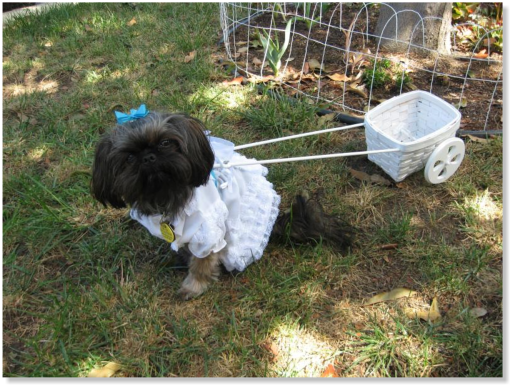
Sheryl Bass and her husband Neil Cline stumbled on an idea for a business as they were planning their wedding in 2006. Both wanted their dogs to participate in the wedding but didn't want anything that would be uncomfortable to wear or anything that would be toxic. Bass wanted her dog to fulfill the traditional "flower child" role, but no such product existed for the pet to hold the flower petals as they were distributed.

And so, Pawsitively Purrfect Products and its "Pet Petal Pullcart" was created.

It just so happens that Cline is pretty handy, Bass says. After testing various contraptions on their own pet, they came up with a wooden cart that attaches to a harness and dispenses flower petals from the back. The customizable hand-carved pull cart is for small dogs (less than 30 pounds) and sells for $130 on the company's website.

Bass and her husband, who both have full-time jobs as a publicist and psychotherapist, respectively, have hit on an explosive trend -- consumers are expected to spend nearly $53 billion on pets in 2012, according to the American Pet Products Association. Boutique businesses that offer pet outfits, treats (that literally look good enough for humans to eat) and toys are on the rise. And so is the trend of including furry loved ones in weddings.

The Pet Petal Pullcart is so popular that the couple cannot keep up with production (pull carts are made-to-order given the pet's weight and length specifications), Bass says. However, the couple has had to turn away customers, especially those looking to use the product for bigger breeds.

Bass says they hope to license the product, so that a bigger company can mass produce the item and come up with a solution to the big-breed dilemma. She also wants to add other products to the business down the line, she says.

[Via - The Street]

SafetyTats.com Story

How to Make Millions with Your Ideas: An Entrepreneur’s Guide

Crazy Startups - Hangover Bus

How To Sell A Dog For $230,000

From 0 To $30,000 A Month With Dropshipping

Up and down (and up and down) with Baltimore County internet-porn pioneers Jen and Dave

Company Name Ideas

Daily advice link - Designer? We Are Hiring!

Saturday, 14 April 2012

How I Turned Hobby Into A Thriving Crowdsourcing Business

Idea Spotlight - New Startup Pays Experts To Answer Questions


I have turned my hobby (playing with words) into a thriving crowdsourcing business (PickyDomains.com). Ok, the income may be fluctuating rather wildly (last month I had a day when I received $1000 worth of new orders, but I also had a day when only one order was placed), but this is mostly my own fault. Out of 5 years PickyDomains.com exists, I’ve really marketed it heavily only probably around 9 months and because it was not my primary income source, so for a few years PickyDomains kind of lived its own life and marketed itself.

I am not writing this post to ‘inspire’ anyone. I think there is a log of ‘inspiroin’ going around. Rather I am going to tell you EXACTLY what I did and hopefully some of these tricks will help you strike on your own or get to the income level where you don’t have to work 9-5 job (unless that’s what you love doing).

So let’s start at the beginning. I was born in Russia and in 1995 moved to US. I finished highschool, then went to a community college, before finally graduating with BS in Microbiology. I worked in a lab for a while but then I decided to move back to Russia. Except there was no job for American-trained microbiologists there. I hooked up with my school buddies there who turned programmers. I told them about shareware and we started a few shareware related businesses, that were quite profitable for a while, but are now mostly dead – namely DePrice.Com (shareware discounter) and SoftwareJudge.com (it think the idea is brilliant and most likely I’ll relaunch it with iPad and Android in mind when I get a chance).

One of the things Russian shareware community really needed was names and domains for their software that sounded ‘American’. Several translation and localization services offered a deal where you paid about $100 and was offered 10 names or domains to choose from. But oftentimes you’d spend $100 and get nothing decent. So I came up with the idea of risk-free naming service. A client would tell me what he wanted and I’d send him or her a list of suggestions. If they decided to use one of suggestions, I’d get $50.

I worked and it work real well. After a year or two I had so many orders, it was humanly impossible to do them all myself. Two things were obvious. First, I really should involve others in naming projects and split the pay with them, and second, I really should not limit myself to Russian shareware community. The whole world is out there. This is how PickyDomains.Com was born.

Now, mind you, I started naming domains way back in 2003 and PickyDomains.com was registered in late 2006. Nowadays even Google is involved in domain naming (through Prizes.Org) but back then the idea of crowdsourcing naming service was pretty novel. I didn’t even hear the word ‘crowdsourcing’ until much, much later.

How do I market the site that nobody outside a tiny community of Russian shareware programmers (3000 people back then) knows about? Blogs.

Blogs fall into two categories – those you own and those you don’t. If it’s your blog – you can post whatever you want, whenever you want. The more people read you, the better it is. That’s obvious. I already had a rather popular personal blog in Russian, but my prospects were mostly in US and Europe. I didn’t have time for another personal blog, so I started a network of blog ‘aggregators’.

Back then a rather popular idea was creating ‘autoblogs’. Supposedly you’d set your blog to automatically publish RSS feeds by keyword or keyphrase. Like ‘startups’. Your blog would aggregate stories from Google News or Yahoo News that contained word ‘startups’, you’d monetize the traffic through Adsense and what not, and get rich, rich, rich. Joel Comm was one of the sleazebags particularly popular during this ‘Adsense riches’ era. But I knew it would never work and it did not (except for Joel Comm who made millions selling his shitty e-books, but that’s how life works).

Since I loved startups stories, especially about unusual startups, I figured I’d select best stories myself the post them on the blog. My bet was that other people would appreciate the fact that they can come to one place and get their daily fix of cool startup stories. And I was right. It worked quite well. In fact, second generation news aggregators, like Huffington Post and BusinessInsider.Com really did strike it rich (I believe HuffPost was sold for 300+ million dollars).

Of course, my blog network was never that big, but it did achieve its main goal – I’ve had blogs that had several hundred to several thousand daily readers each. You are reading one such blog that remains popular with people and even social networks (posts from NicheGeek get picked up regularly by Twitter, Reddit, Facebook, Digg and StumbleUpon).

Famous Chinese saying goes ‘The best time to plant a tree was 20 years ago. The next best is now.’ This is exactly how I feel about having your own media resources. You’ll need them in the future (and they pay for themselves via commission and ad revenue even when you aren’t using them to promote your projects).

While you may not want to do exactly what I did, when you are just launching something, having own blog, site, news aggregator, social network community or forum where you have maybe only 500 readers can really mean life or death of an idea. These first orders may prove to be really critical, especially psycologically. But since it’s safe to assume that very few people will go out and ‘plant trees’ today, I’ll tell you how I got free publicity from blogs I did not own and control.

That’s going to be in part two.

[Via - NicheGeek.com]

SafetyTats.com Story

How to Make Millions with Your Ideas: An Entrepreneur’s Guide

Crazy Startups - Hangover Bus

How To Sell A Dog For $230,000

From 0 To $30,000 A Month With Dropshipping

Up and down (and up and down) with Baltimore County internet-porn pioneers Jen and Dave

I Need A Domain Name

Daily advice link - Designer? We Are Hiring!

Friday, 13 April 2012

Smart Ideas - SafetyTats

Idea Spotlight - New Startup Pays Experts To Answer Questions


http://www.safetytat.com/

If you have you ever lost your child, even for a moment, you know that it is every parent’s worst nightmare.

Here’s a product to make you feel better about that eventuality: SafetyTats are temporary child identification tattoos that when applied to a child’s arm provide an immediate and highly visible form of identification and contact should your child become lost. Unlike just writing your telephone number of your child’s arm, the temporary tattoo is waterproof.

Where’d the idea come from?

The idea for SafetyTat temporary child ID tattoos was born of necessity one weekend at an amusement park. On Labor Day Weekend, Baltimore Mom, Michele Welsh and her husband, there with their three small children, felt out-numbered. To stave her panic, she quickly wrote her mobile phone number on each of their arms with a ballpoint pen. As she did this, she thoughtfully explained to each of them the importance of staying close to Mommy and Daddy. She also told them that if they were separated that the number on their arm was a way to reconnect with them.

Throughout the day of fun, Michele had to rewrite the number several times as it smeared or washed off. Several parents in the park stopped her to ask if that was her number on the kids’ arms. Each time, they loved the idea.

The day was a success and the idea for SafetyTat temporary child id tattoos was born.

[Via - Dane Carson]

Startup Spotlight - Trademarkia.com

How to Make Millions with Your Ideas: An Entrepreneur’s Guide

Crazy Startups - Hangover Bus

How To Sell A Dog For $230,000

From 0 To $30,000 A Month With Dropshipping

Up and down (and up and down) with Baltimore County internet-porn pioneers Jen and Dave

I Need A Domain Name

Daily advice link - Designer? We Are Hiring!

Saturday, 7 April 2012

Weird Sells - Strange Online Business Ideas That Worked.

crazy-ideas-that-worked

1. MillionDollarHomepage.com

Selling pixels on a website is a ridiculous idea but when it comes to the internet, ridiculous ideas have always been the the key to getting ridiculous amounts of money. For Alex Tew selling pixels on a website was simply supposed to be something to help him pay for college. Little did he know it would do more than that and that it would in fact help him get a head start on life and now the young man is already worth over a million dollars. Interviews on major News networks and more publicity than a 21 year old would know what to do with would follow and soon enough other people even tried to piggyback on his idea. Now that is ridiculous, ridiculously successful.

2. SantaMail.org

Each year it gets harder to convince kids that there is a real Santa Claus somewhere in the North pole. But no kid would argue if they got a reply directly from Santa himself and armed with this idea Byron Reese set out to become a real live Santa Claus for kids all over the world. Through the website SantaMail.org, kids got the chance to send their letters to ‘Santa’ at the ‘North Pole’. To get a personalized reply from Santa would cost the kids parents $9.95. This may not seem like much until you multiply it by the 300 000 responses that ‘Santa’ sent last year alone.

3. ShitMyDadSays

What do you get when you put together an unemployed writer living with his parents, a father with enough sarcastic remarks to make a grown up cry and a twitter account? In Justin Halpern’s experience, you get mentioned on The Daily show, a book deal and last but not least a sitcom deal. A mere 30 days after the writer started posting his father’s ‘wisdom’ on a twitter account, Justin Halpern was well on his way to a successful life without even trying.

4. WheresGeorge.com

We are always being told to wash our hands after touching money because we don’t know where the money has been. Now possible for you to know exactly where your money has been just by logging into WheresGeorge.com. This website tracks your money by allowing users to enter their zip codes and currency serial numbers. If the person who had the bill before you had already done the same, you will get to see just where your money has been. You will also be able to see where the bill is if the next owner does the same thing. The website is currently tracking nearly 200 million bills worth over a billion U.S. dollars.

5. PickyDomains.com

At the beginning of the ‘dot com’ era you could get paid thousands of dollars for a single domain name if it caught the attention of the right people. Dmitry Davydov’s success online went something like this, except he charged a measly fifty dollars for each domain name that he came up with. The buyers liked it since it was risk free and they didn’t have to pay anything if they didn’t like the name. Dmitry liked the idea because every single domain name he sold meant fifty dollars gotten doing something that he enjoyed. Soon enough The San Francisco Chronicle got wind of his story and with the fame came more customers. Crowd sourcing became the next step for Dmitry and the rest is history.

6. FindAGrave.Com

Visiting famous people is a creepy hobby. Visiting them after they have passed on is the idea that Jim Tipton used to achieve success. When Jim’s ‘tombstone tourism’ came to a sudden halt after he ran out of dead celebrities to visit in his native Utah, he started FindAGrave.com; a site that was dedicated to locating the graves of people buried anywhere inside the U.S. More than enough people were happy to make use of the site and soon enough genealogy research and other paid services were being offered as well on the website.

7. Doggles.com

It may have been the world’s most worthless invention ever but to Ken and Roni di Lullo, this crazy idea turned out to be worth millions. Most dog owners would never have thought to buy sunglasses for their dogs but the moment ‘Doggles’ started to be marketed as an anti UV radiation shield, thousands of dog owners rushed to get a pair for their dogs. The result? Cool looking dogs and two new members in the millionaires club with a chain of shops in 16 countries around the world.

8. GeesePoliceInc.com

It may not be an online business but it was with the help of the internet that David Marcks managed to change a relatively simple idea into a 2 million dollar a year business. In the 1980s, David noticed two things as he worked on the golf course. First, the wild geese were proving to be quite irritating and second, his border collie was unusually effective when it came to chasing away these birds. Putting these two together, David Marcks started his very own business that now comprises 27 trucks and 32 dogs with the mission of ridding any place of wild geese.

9. BugMeNot.com

Most internet users would agree that there is nothing more irritating than having to register to access a site that is already free. However, nobody would agree more to this fact than Guy King and that is why he decided to do something about it. BugMeNot.com is a free web service that was started by King to provide instant logins to free sites (like YouTube.com or NYTimes.com) and the site was a major success since many users were tired of having to waste time on pointless registration processes and having to expose their email addresses to spamming. In an ironic twist, BugMeNot.com got publicity simply because they tried to shut it down in 2004. After a simple mention of this fact in Wired magazine, the website got even more attention and was soon expanding to other niches such as Retailmenot.com.

10. ShoppingCartAbuse.Com

Only a crazy person would fall in love with an idea such as this one. Luckily for the owner of ShoppingCartAbuse.com there are plenty of crazy people out there. According to the website description, “The Center for Prevention of Shopping Cart Abuse is an organization dedicated to preventing the pervasiveness of Shopping Cart abuse”. With T-shirts and other commercial interests, the website became an instant hit and even a few Hollywood celebrities could not resist being part of this ‘campaign’.

Thursday, 5 April 2012

Weird Startups - WotWentWrong.com

Need business name ideas? PickyDomains.com, world's first risk free naming agency


http://wotwentwrong.com/

Those who don’t learn from the past are doomed to repeat it, as the old saying goes, and that’s surely just as true in dating as it is elsewhere. Enter WotWentWrong, an Australian site that aims to help singles learn from their failed relationships so as to improve their romantic outlook for the future.

Launched earlier this year by Melbourne-based Fruition Consulting Group, WotWentWrong is a free web app that lets anyone send a low-key, customizable feedback request to a former date who has since disappeared from their life. WotWentWrong sends the request securely on the user’s behalf via email or — in the US and Canada — via text message. Those on the receiving end of such a request can then respond quickly and easily thanks to predefined categories to explain why they lost interest; if they want, there’s also the option to add personal details. Recognizing that exes may not be inclined to participate without some extra motivation, WotWentWrong promises to share the user’s own ratings of the ex on several key features in exchange for their feedback. Only the parties involved can see ratings and feedback relating to their own past relationship, and there’s an option to offer unsolicited feedback as well.

Now in beta, WotWentWrong is planning to launch a section with aggregated and anonymized statistics summarizing various aspects of dating trivia. Time to help some lonely hearts learn from past mistakes in your part of the world with something similar?

[Via - Springwise.com]

Porn Industry Isn't Shy About Using Crowdsourcing

The Million-Dollar Idea in Everyone: Easy New Ways to Make Money from Your Interests, Insights, and Inventions

How To Get Rich Selling Unicorn Meat On Amazon.com

From 0 To $30,000 A Month With Dropshipping

Making Million Raising Wild Buffalo

YBuy.Com Tries Shareware Model With Hardware Goods.

Will SproutSocial Become Google Of SMM?

In DC You Can Make Up To $50 An Hour Standing In Line For Others

Daily advice link - Freelancer? We are hiring!