


Online business ideas have created incredible entrepreneurial
opportunities for the modern businessman. The previously distant dream
of self-employment from home is now a legitimate career option. Today,
most financial transactions occur online. Consumers essentially depend
on the internet to find the products they desire. So who is out there
earning all of this internet generated income?
There are various available career options that allow entrepreneurs
to get their hands on this cash. Perhaps the most fruitful and efficient
way to generate an online income is through product promotion of some
kind. This can be done by assuming the role of an online marketer.
Although there are various different marketing programs available, the
ultimate goal is the same.
A marketer's job on the internet is to execute product promoting
strategies that result in a sale. Online marketing strategies, such as
blogging and social media marketing, are available for any budding
entrepreneur to learn. By taking the time to learn these strategies,
anyone can begin a new career from the familiarity of their own home.
Why Should I Look into a Business on the Web?
Think back to when you were a child. What did you want to be when you
grew up? I can comfortably promise that you didn't picture yourself
trading time for money. When considering career options you may realize
that many lack the potential for considerable mobility within most
businesses. Many of us truly are trading our freedom for a salary.
Now imagine what it would be like to regain some of that freedom. By
electing to pursue one of many available businesses on the internet, you
can assume control of your time and financial future. Self-employed
individuals determine their own work load and hours. If those freedoms
alone aren't enough to peak your interest, maybe you should leave this
page. In addition to lacking time constraints, home business owners
dictate their own income.
The Truth Regarding Businesses on the Internet!
This is not to say successfully operating a business on the
world-wide-web is easy. That being said, online business owners have an
uncapped earning potential that can be found in very few industries. If
you take the time to research online business ideas, I think you'll find that being the boss isn't so bad.
Marketing on the World-Wide-Web
Making money online can be as simple as telling others about great
products. If you perform adequate research, you'll most definitely find
that a massive selection of products are available for online marketing
opportunities. Marketers working on the internet can promote anything
from video games to health care products.
An integral aspect of an internet marketer's job is blogging.
Although blogging is traditionally viewed as a hobby, it is actually a
remarkably useful sales tool. Adding original content to a blog daily
can considerably increase sales. In order to do so, marketers must
promote their blog elsewhere. This can be carried out by utilizing
existing social media platforms. Social networking websites, which most
of us already know how to navigate, can prove to be wonderful marketing
tools.
With billions of users, the world-wide-web is the simply the most
populated market place possible. An online marketer's job is simply to
find a way to effectively reach a fraction of this massive online
population. If performed correctly, internet marketing is one of the
most financially rewarding online business ideas available.
Showing posts with label offline. Show all posts
Showing posts with label offline. Show all posts
Friday, 17 January 2014

Tuesday, 31 July 2012
FoodBiz - MobiMunch.com
Daily Advice Link - How I Increased Sales 350% With Press-Release

http://www.mobimunch.com/
Food trucks are here to stay, and nowhere was this more evident than at an Off the Grid event last spring in San Francisco. The 35 trucks, tents and carts that made it through the application process took over Fort Mason Center's parking lot one nippy Friday evening, dishing out steadily dwindling supplies of empanadas, kalbi and mango-sticky-rice popsicles to a ravenous crowd.
In the midst of the aromatic chaos sat the Chairman, a Zagat-rated truck famous for its pork-belly Chinese bao (steamed buns). It was the first of dozens of trucks developed by Mobi Munch. Founded in 2009, Mobi Munch aimed to streamline the mobile food industry with a turnkey platform that standardizes every part of the operation--from vehicles and food sources to securing permits and negotiating with event promoters and office parks.
The goal, according to CEO Josh Tang, is to make every chef and restaurant owner feel they need a truck, just as they do a website. "Trucks are the one sector of the food-service industry that's still growing, and until now, there's been no regulation, and a lot of missed opportunities," he says, speaking from his downtown Los Angeles offices.
The Mobi revolution began with customized trucks, rebuilt by a manufacturing partner from the chassis up with features such as next-generation cloud-based POS systems and onboard generators. The low-mileage, late-model trucks are crash-test and sanitation certified, then leased out for as little as a year. If a chef strikes gold with a menu, Mobi can scale quickly, rolling out a fleet in two weeks.
The company recently launched MobileCravings.com, a nationwide food-truck private-lot booking system, to help its customers secure locations for their rigs. Tang is even looking into new engine technology to help power onboard kitchens more efficiently.
In the last three years, Mobi Munch has grown to 20 employees, scored a round of $7.8 million in funding and signed on pilot corporate clients such as Red Robin and Rubios, along with food-service companies like Aramark and Centerplate.
"We're not thinking linear growth," Tang says, stressing that Mobi's services not only help independent young chefs build a brand with lower risk, but also enable veteran restaurateurs to test new neighborhoods at a fraction of the cost of a commercial lease or advertising campaign. The end result is that consumers can try out more creative menus at a lower price. Who doesn't have an appetite for that?
[Via - Entrepreneur]
Kindle Fire Giveaway
Weird Jobs - Danger Artist
Lifehacks - Convert Reward Points On Your Card To Dollars In Your PayPal Account
Off the Books: The Underground Economy of the Urban Poor
PickyDomains - startup that caught everyone by surprise
The Coolest Facebook Business Tool You Probably Never Heard About
The (Evergrowing) List Of Cool Bootstrapping Sites
From 0 To $30,000 A Month With Dropshipping
My Name Is Beer, Mr.Beer

http://www.mobimunch.com/
Food trucks are here to stay, and nowhere was this more evident than at an Off the Grid event last spring in San Francisco. The 35 trucks, tents and carts that made it through the application process took over Fort Mason Center's parking lot one nippy Friday evening, dishing out steadily dwindling supplies of empanadas, kalbi and mango-sticky-rice popsicles to a ravenous crowd.
In the midst of the aromatic chaos sat the Chairman, a Zagat-rated truck famous for its pork-belly Chinese bao (steamed buns). It was the first of dozens of trucks developed by Mobi Munch. Founded in 2009, Mobi Munch aimed to streamline the mobile food industry with a turnkey platform that standardizes every part of the operation--from vehicles and food sources to securing permits and negotiating with event promoters and office parks.
The goal, according to CEO Josh Tang, is to make every chef and restaurant owner feel they need a truck, just as they do a website. "Trucks are the one sector of the food-service industry that's still growing, and until now, there's been no regulation, and a lot of missed opportunities," he says, speaking from his downtown Los Angeles offices.
The Mobi revolution began with customized trucks, rebuilt by a manufacturing partner from the chassis up with features such as next-generation cloud-based POS systems and onboard generators. The low-mileage, late-model trucks are crash-test and sanitation certified, then leased out for as little as a year. If a chef strikes gold with a menu, Mobi can scale quickly, rolling out a fleet in two weeks.
The company recently launched MobileCravings.com, a nationwide food-truck private-lot booking system, to help its customers secure locations for their rigs. Tang is even looking into new engine technology to help power onboard kitchens more efficiently.
In the last three years, Mobi Munch has grown to 20 employees, scored a round of $7.8 million in funding and signed on pilot corporate clients such as Red Robin and Rubios, along with food-service companies like Aramark and Centerplate.
"We're not thinking linear growth," Tang says, stressing that Mobi's services not only help independent young chefs build a brand with lower risk, but also enable veteran restaurateurs to test new neighborhoods at a fraction of the cost of a commercial lease or advertising campaign. The end result is that consumers can try out more creative menus at a lower price. Who doesn't have an appetite for that?
[Via - Entrepreneur]
Kindle Fire Giveaway
Weird Jobs - Danger Artist
Lifehacks - Convert Reward Points On Your Card To Dollars In Your PayPal Account
Off the Books: The Underground Economy of the Urban Poor
PickyDomains - startup that caught everyone by surprise
The Coolest Facebook Business Tool You Probably Never Heard About
The (Evergrowing) List Of Cool Bootstrapping Sites
From 0 To $30,000 A Month With Dropshipping
My Name Is Beer, Mr.Beer
Daily Advice Link - Free Logo Service
Tuesday, 24 July 2012
Niche Biz - Danger Artist
Hot Tips - The Best Free Business Tool You Don't Know About.

http://www.tonyakay.com/
When Tonya Kay performs her “fire pasties” routine this Wednesday at TRiP in Santa Monica, Calif., as part of the bar’s weekly burlesque show (doors open at 8pm, $10 cover), she’s almost positive her breasts won’t blow up this time.
It took a few performances to get it right. The first time she tried it, she says, she used 70 percent rubbing alcohol, and her pasties burned out “as soon as I started shaking.” She had to re-light her breasts several times during the act, which the audience enjoyed but she found “cheesy.” The second time, she used something a little stronger: lighter fluid. “The difference between 70 percent rubbing alcohol and lighter fluid is massive,” Kay says. “I had flames coming off … that were so huge, everyone in the first few rows had to duck.” She ended up with a blister burn on her stomach that left a scar—a permanent reminder of just how perilous her profession really is.
She eventually learned that the best way to set your breasts on fire is with 100 percent rubbing alcohol. “They light well and they stay lit without engulfing the whole stage in flames,” she says. Even so, if you’re in Los Angeles this week and decide to check out her show, you might want to watch from the back.
Fiery breasts aren’t the only risky spectacle in Kay’s performance repertoire. She’s also a whip cracker, a knife-throwing target, a stilt dancer, a balloon swallower, and a grinder girl, which involves making sparks on a metal bikini with an angle grinder. Her highly specialized field is such a niche that she had to invent a name for it. She calls it “Danger Arts.” And that’s not self-aggrandizement. It’s truth in advertising.
Take stilt dancing, which she performed most recently on last week’s NBC music contest, The Voice. “You could break your knees pretty easily,” Kay says. “And if you fell or slipped, it’s very possible that you could break your neck and die.” But the stunt most likely to “screw up my future,” she says, is the grinder-girl act. The blades on an angle grinder are designed to cut through metal, and although the deadly blades only make contact with her metal bikini during the act, they come frighteningly close to unprotected skin. “There’s major arteries all through the inner thigh,” she says. “One slip and you could grind through flesh and bone pretty easily and quickly.” She knows at least two former grinder girls who did just that and ended up being taken away in ambulances.
Which explains why she rarely has to audition anymore. There’s just not much competition out there. “When some choreographer or producer decides that they need a grinder girl act, they’ll call the agents,” she says. “And the agents will put out a casting call, ‘We need grinder girls.’ And two of us will show up.” She’s essentially cornered the market on putting her life in mortal danger for entertainment. And business has been good. Over the past decade, she’s performed everywhere, from TV shows like America’s Got Talent and the History Channel’s More Extreme Marksmen to touring the country for three years with STOMP, the percussion and dance troupe. She’s been used for knife target practice on the Tonight Show and cracked a flaming bullwhip during a special post-Super Bowl episode of Glee.
She’s learned two important lessons during her decade-long career in the danger arts. No 1: Never imbibe before the final curtain. “Free drinks is one of the perks of performing at bars,” she says. “But that’s how you end up in the emergency room.” Second, show the audience your fear, even if you’re not afraid. “An audience doesn’t want to see an effortless, safe production,” she says. “They want to believe there’s a chance that somebody could get hurt.”
Which isn’t a difficult emotion to convey, because it turns out there really is a chance that somebody could get hurt. Even when all precautions are taken to make her act as safe as possible, you just never know when one of Kay’s breasts is going to burst into flames.
[Via - BusinessWeek.Com]
Smart Marketing - LanderApp Review
Lifehacks - Convert Reward Points On Your Card To Dollars In Your PayPal Account
Off the Books: The Underground Economy of the Urban Poor
PickyDomains - startup that caught everyone by surprise
The Coolest Facebook Business Tool You Probably Never Heard About
The (Evergrowing) List Of Cool Bootstrapping Sites
From 0 To $30,000 A Month With Dropshipping
My Name Is Beer, Mr.Beer
Daily Advice Link - How I Increased Sales 350% With Press-Release
http://www.tonyakay.com/
When Tonya Kay performs her “fire pasties” routine this Wednesday at TRiP in Santa Monica, Calif., as part of the bar’s weekly burlesque show (doors open at 8pm, $10 cover), she’s almost positive her breasts won’t blow up this time.
It took a few performances to get it right. The first time she tried it, she says, she used 70 percent rubbing alcohol, and her pasties burned out “as soon as I started shaking.” She had to re-light her breasts several times during the act, which the audience enjoyed but she found “cheesy.” The second time, she used something a little stronger: lighter fluid. “The difference between 70 percent rubbing alcohol and lighter fluid is massive,” Kay says. “I had flames coming off … that were so huge, everyone in the first few rows had to duck.” She ended up with a blister burn on her stomach that left a scar—a permanent reminder of just how perilous her profession really is.
She eventually learned that the best way to set your breasts on fire is with 100 percent rubbing alcohol. “They light well and they stay lit without engulfing the whole stage in flames,” she says. Even so, if you’re in Los Angeles this week and decide to check out her show, you might want to watch from the back.
Fiery breasts aren’t the only risky spectacle in Kay’s performance repertoire. She’s also a whip cracker, a knife-throwing target, a stilt dancer, a balloon swallower, and a grinder girl, which involves making sparks on a metal bikini with an angle grinder. Her highly specialized field is such a niche that she had to invent a name for it. She calls it “Danger Arts.” And that’s not self-aggrandizement. It’s truth in advertising.
Take stilt dancing, which she performed most recently on last week’s NBC music contest, The Voice. “You could break your knees pretty easily,” Kay says. “And if you fell or slipped, it’s very possible that you could break your neck and die.” But the stunt most likely to “screw up my future,” she says, is the grinder-girl act. The blades on an angle grinder are designed to cut through metal, and although the deadly blades only make contact with her metal bikini during the act, they come frighteningly close to unprotected skin. “There’s major arteries all through the inner thigh,” she says. “One slip and you could grind through flesh and bone pretty easily and quickly.” She knows at least two former grinder girls who did just that and ended up being taken away in ambulances.
Which explains why she rarely has to audition anymore. There’s just not much competition out there. “When some choreographer or producer decides that they need a grinder girl act, they’ll call the agents,” she says. “And the agents will put out a casting call, ‘We need grinder girls.’ And two of us will show up.” She’s essentially cornered the market on putting her life in mortal danger for entertainment. And business has been good. Over the past decade, she’s performed everywhere, from TV shows like America’s Got Talent and the History Channel’s More Extreme Marksmen to touring the country for three years with STOMP, the percussion and dance troupe. She’s been used for knife target practice on the Tonight Show and cracked a flaming bullwhip during a special post-Super Bowl episode of Glee.
She’s learned two important lessons during her decade-long career in the danger arts. No 1: Never imbibe before the final curtain. “Free drinks is one of the perks of performing at bars,” she says. “But that’s how you end up in the emergency room.” Second, show the audience your fear, even if you’re not afraid. “An audience doesn’t want to see an effortless, safe production,” she says. “They want to believe there’s a chance that somebody could get hurt.”
Which isn’t a difficult emotion to convey, because it turns out there really is a chance that somebody could get hurt. Even when all precautions are taken to make her act as safe as possible, you just never know when one of Kay’s breasts is going to burst into flames.
[Via - BusinessWeek.Com]
Smart Marketing - LanderApp Review
Lifehacks - Convert Reward Points On Your Card To Dollars In Your PayPal Account
Off the Books: The Underground Economy of the Urban Poor
PickyDomains - startup that caught everyone by surprise
The Coolest Facebook Business Tool You Probably Never Heard About
The (Evergrowing) List Of Cool Bootstrapping Sites
From 0 To $30,000 A Month With Dropshipping
My Name Is Beer, Mr.Beer
Daily Advice Link - How I Increased Sales 350% With Press-Release
Friday, 22 June 2012
NicheBiz - LazBoy Spas
Daily advice link - Freelancer? We are hiring!

http://www.lazboyspas.com/
La-Z-Boy is a brand name synonymous to home furniture, most notably, comfortable seating - sofas, upholstered recliners, sleeper sofas and stationary chairs.
Over 80 years ago, La-Z-Boy started out as a partnership between cousins Edwin Shoemaker and Edward Knabusch. In small town Monroe, Michigan, they invested in a furniture business and set out to design a wood-slat porch chair with a recliner system. Their invention was a hit, and as they say, the rest is history.
In keeping with the cousins' designing philosophy – "nature's way of relaxing" – La-Z-Boy Spas/Hot Tubs has taken comfort to a whole new level and developed what the company calls the perfect spa. Currently, it is offering the market three collections of underwater seating that are available in the hot tub industry anywhere. From Premier to Signature to Classic, there's a wide array of choices waiting for you, no matter how constrained your hot tub spa equipment budget might be.
Every La-Z-Boy Spas/Hot Tubs product employs a winning six-C strategy. One, indoors or outdoors, just like the first La-Z-Boy chair, it's engineered to be comfortable. Two, from 14 pre-programmed massage patterns to La-Z-Boy's exclusive AquaFlex Massage Technology, your massage can definitely be customizable. Three, a combination of dual microfiltration, pressurized ozone and a weekly La-Z-Boy Aquazure application ensures convenient maintenance and water management.
Four, the Therma-Zone insulation system ensures cost savings through energy efficiency. Five, since its inception, craftsmanship has been one of La-Z-Boy's trademarks. Then and now, special attention is given to the various elements of each product. And six, La-Z-Boy promises consumer protection via a guarantee that's 100% no nonsense and no fine print.
[Via - Webiot.com]
Why You've Heard Of Microsoft, But Not Leafully.Com
Startup Buzz - AllPhotoLenses.Com
The (Not Yet) Big List Of Bootstrapping Resources
From 0 To $30,000 A Month With Dropshipping
Unusual Business Ideas - SleepTracker
How I Increased Sales 350% With Press-Release
Bootstrapping 101: Tips to Build Your business with Limited Cash and Free Outside Help
Need To Make A Quick Buck? Copy This Post!

http://www.lazboyspas.com/
La-Z-Boy is a brand name synonymous to home furniture, most notably, comfortable seating - sofas, upholstered recliners, sleeper sofas and stationary chairs.
Over 80 years ago, La-Z-Boy started out as a partnership between cousins Edwin Shoemaker and Edward Knabusch. In small town Monroe, Michigan, they invested in a furniture business and set out to design a wood-slat porch chair with a recliner system. Their invention was a hit, and as they say, the rest is history.
In keeping with the cousins' designing philosophy – "nature's way of relaxing" – La-Z-Boy Spas/Hot Tubs has taken comfort to a whole new level and developed what the company calls the perfect spa. Currently, it is offering the market three collections of underwater seating that are available in the hot tub industry anywhere. From Premier to Signature to Classic, there's a wide array of choices waiting for you, no matter how constrained your hot tub spa equipment budget might be.
Every La-Z-Boy Spas/Hot Tubs product employs a winning six-C strategy. One, indoors or outdoors, just like the first La-Z-Boy chair, it's engineered to be comfortable. Two, from 14 pre-programmed massage patterns to La-Z-Boy's exclusive AquaFlex Massage Technology, your massage can definitely be customizable. Three, a combination of dual microfiltration, pressurized ozone and a weekly La-Z-Boy Aquazure application ensures convenient maintenance and water management.
Four, the Therma-Zone insulation system ensures cost savings through energy efficiency. Five, since its inception, craftsmanship has been one of La-Z-Boy's trademarks. Then and now, special attention is given to the various elements of each product. And six, La-Z-Boy promises consumer protection via a guarantee that's 100% no nonsense and no fine print.
[Via - Webiot.com]
Why You've Heard Of Microsoft, But Not Leafully.Com
Startup Buzz - AllPhotoLenses.Com
The (Not Yet) Big List Of Bootstrapping Resources
From 0 To $30,000 A Month With Dropshipping
Unusual Business Ideas - SleepTracker
How I Increased Sales 350% With Press-Release
Bootstrapping 101: Tips to Build Your business with Limited Cash and Free Outside Help
Need To Make A Quick Buck? Copy This Post!
Daily Advice Link - Free Logo Service
Saturday, 5 May 2012
From Making Sushi In A Home Kitchen To Sushi Empire - Philip Maung Story (HisshoSushi.Com)
Daily advice link - Freelancer? We are hiring!

http://www.hisshosushi.com/
When Philip Maung began a sushi-making company on his dining room table 14 years ago, a 46,000-square-foot headquarters with ping-pong tables, spontaneous karaoke sing-a-longs and smiling employees seemed like a distant dream. Yet, over the last decade and amid a struggling economy, Maung has built his business into a vibrant food service distribution company that currently manages over 400 sushi bars in high-end grocery stores, cafes, hospitals and universities throughout the United States.
A true embodiment of the American dream (he came to the U.S. in 1989 with $13), Maung saw a business opportunity in a practically destitute sushi market on the east coast. He chose Charlotte as the company's base because of the number of banks the city had, but quickly learned they were hesitant to give him a loan without previous successes. Pooling resources with his wife, Maung says Hissho started with many sleepless nights.
Quality product and detailed service was what brought Hissho early success, allowing it to snowball into the franchise it is today. Hissho boasts 62% 3-year growth in an economic decline.
"We don't advertise," Muang explains, "People call us. Our business was built through word of mouth. Our success came because we built relationships with one partner at a time and we stand behind our product."
Muang likens Hissho to Starbucks, calling his sushi an "affordable luxury." The product is also in areas people who are no longer eating out usually tend to go: the supermarket.
Hissho's mission to produce the highest quality sushi with the best ingredients starts at its hub in Charlotte. All of Hissho's chefs spend seven to 11 weeks training at the company's headquarters before relocating to a Hissho sushi bar in affiliated market places.
Despite his company's dominance of the supermarket sushi culture (reporting $34.6 million in revenue for 2010) and an invitation last fall to hear President Obama speak to Congress, Maung is happiest about his company's recent internal transformation.
"The first 10 years we didn't have a company culture at all," Maung says. "We worked so hard. I began to realize that money wasn't everything and our people were tired. We've created a second home for our employees and we make sure they have fun. Nothing is going to happen if you don't take care of your people."
[Via - Unusual Business Ideas]
How I Turned Hobby Into A Thriving Crowdsourcing Business. Part 3
Estimize.Com Bets That Crowds Are Smarter Than Wallstreet Analysts.
Bootstrapping 101: Tips to Build Your business with Limited Cash and Free Outside Help
How Does eWorky Work?
From 0 To $30,000 A Month With Dropshipping
New Startup Pays Experts To Answer Questions
The Lean Startup: How Today's Entrepreneurs Use Continuous Innovation to Create Radically Successful Businesses
Need Perfect Software Name? Try Crowdsourcing.
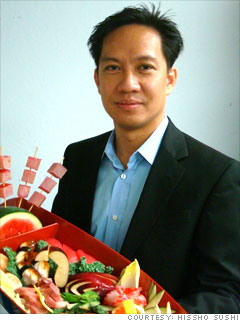
http://www.hisshosushi.com/
When Philip Maung began a sushi-making company on his dining room table 14 years ago, a 46,000-square-foot headquarters with ping-pong tables, spontaneous karaoke sing-a-longs and smiling employees seemed like a distant dream. Yet, over the last decade and amid a struggling economy, Maung has built his business into a vibrant food service distribution company that currently manages over 400 sushi bars in high-end grocery stores, cafes, hospitals and universities throughout the United States.
A true embodiment of the American dream (he came to the U.S. in 1989 with $13), Maung saw a business opportunity in a practically destitute sushi market on the east coast. He chose Charlotte as the company's base because of the number of banks the city had, but quickly learned they were hesitant to give him a loan without previous successes. Pooling resources with his wife, Maung says Hissho started with many sleepless nights.
Quality product and detailed service was what brought Hissho early success, allowing it to snowball into the franchise it is today. Hissho boasts 62% 3-year growth in an economic decline.
"We don't advertise," Muang explains, "People call us. Our business was built through word of mouth. Our success came because we built relationships with one partner at a time and we stand behind our product."
Muang likens Hissho to Starbucks, calling his sushi an "affordable luxury." The product is also in areas people who are no longer eating out usually tend to go: the supermarket.
Hissho's mission to produce the highest quality sushi with the best ingredients starts at its hub in Charlotte. All of Hissho's chefs spend seven to 11 weeks training at the company's headquarters before relocating to a Hissho sushi bar in affiliated market places.
Despite his company's dominance of the supermarket sushi culture (reporting $34.6 million in revenue for 2010) and an invitation last fall to hear President Obama speak to Congress, Maung is happiest about his company's recent internal transformation.
"The first 10 years we didn't have a company culture at all," Maung says. "We worked so hard. I began to realize that money wasn't everything and our people were tired. We've created a second home for our employees and we make sure they have fun. Nothing is going to happen if you don't take care of your people."
[Via - Unusual Business Ideas]
How I Turned Hobby Into A Thriving Crowdsourcing Business. Part 3
Estimize.Com Bets That Crowds Are Smarter Than Wallstreet Analysts.
Bootstrapping 101: Tips to Build Your business with Limited Cash and Free Outside Help
How Does eWorky Work?
From 0 To $30,000 A Month With Dropshipping
New Startup Pays Experts To Answer Questions
The Lean Startup: How Today's Entrepreneurs Use Continuous Innovation to Create Radically Successful Businesses
Need Perfect Software Name? Try Crowdsourcing.
Tuesday, 24 April 2012
Spoon That Measures Salt Content Of The Food You Are Eating.
Live and learn -Top Crowdsourcing Sites

http://compactimpact.com/
Hypertension, or high blood pressure, can be a killer condition. It can lead to a whole host of potentially fatal diseases like kidney failure, heart attack or stroke. Hypertension can be caused by obesity, heredity, a high-salt diet, a sedentary lifestyle, smoking, etc. While heredity is something a person doesn't have control over, smoking, a sedentary lifestyle and a high-salt diet are some things a person can control.
More than home-prepared foods, restaurant and processed foods are unquestionably saltier. So for people, especially the ageing population with escalating health concerns, who need to lower their salt intake, the Salinity Monitor Spoon recently launched by Japanese Compact Impact measures the salinity of soups and sauces at temperatures between 140F (60C) and 176F (80C). The spoon is put into the soup or other liquid foods, and the gauge on the spoon indicates whether the food's saltin ess is between 0.6% and 0.8%, 0.9% and 1.1% or 1.2% and above. This way, the user can decide how much of the food to consume. The Salinity Monitor Spoon is currently pegged at US $58.
Mann Registers 14,962 Domain Names In A 24 Hour Period
Startups That Care - StrearClear
How I Turned Hobby Into A Thriving Crowdsourcing Business. Part 2.
From 0 To $30,000 A Month With Dropshipping
10 Strange But Successful Business Ideas To Inspire Your Inner Entrepreneur
The Million-Dollar Idea in Everyone: Easy New Ways to Make Money from Your Interests, Insights, and Inventions
Daily advice link - Designer? We Are Hiring!

http://compactimpact.com/
Hypertension, or high blood pressure, can be a killer condition. It can lead to a whole host of potentially fatal diseases like kidney failure, heart attack or stroke. Hypertension can be caused by obesity, heredity, a high-salt diet, a sedentary lifestyle, smoking, etc. While heredity is something a person doesn't have control over, smoking, a sedentary lifestyle and a high-salt diet are some things a person can control.
More than home-prepared foods, restaurant and processed foods are unquestionably saltier. So for people, especially the ageing population with escalating health concerns, who need to lower their salt intake, the Salinity Monitor Spoon recently launched by Japanese Compact Impact measures the salinity of soups and sauces at temperatures between 140F (60C) and 176F (80C). The spoon is put into the soup or other liquid foods, and the gauge on the spoon indicates whether the food's saltin ess is between 0.6% and 0.8%, 0.9% and 1.1% or 1.2% and above. This way, the user can decide how much of the food to consume. The Salinity Monitor Spoon is currently pegged at US $58.
Mann Registers 14,962 Domain Names In A 24 Hour Period
Startups That Care - StrearClear
How I Turned Hobby Into A Thriving Crowdsourcing Business. Part 2.
From 0 To $30,000 A Month With Dropshipping
10 Strange But Successful Business Ideas To Inspire Your Inner Entrepreneur
The Million-Dollar Idea in Everyone: Easy New Ways to Make Money from Your Interests, Insights, and Inventions
Daily advice link - Designer? We Are Hiring!
Tuesday, 17 April 2012
Million Dollar Ideas - Canopy Tours
Daily how-to: need brand naming ideas?

http://www.navitat.com/
NEW YORK (CNNMoney) -- Ken Stamps spotted a business idea thousands of miles from his Michigan home, in rainforest-rich Costa Rica, where a popular tourist attraction sends travelers soaring through the treetops on a pulley.
"There are far fewer Costa Rica-type canopy tours in the U.S.," said Stamps. In contrast, most American zip-lining companies are at manmade attractions, such as theme parks or water parks and not in a tree canopy.
After 27 years in the architecture and engineering industry near Detroit, Stamps was hungry for a career change. In 2009, he launched -- with partners Sam and John Walker, a father-son team -- Navitat Canopy Adventures, a zip-lining-tour company in densely wooded areas it leases in Asheville, N.C.; and Wrightwood, Calif.
The company set up cables atop sloped areas of the woods. Participants are strapped into a harness that's attached to a pulley, then gravity sends them sailing among the treetops.
In October 2010, just six months after opening its first facility (242 acres in Asheville), Navitat passed over the $1 million in revenues mark. "We all celebrated," said Stamps. "We had a little Champagne." By the end of November, 16,000 guests had visited the Asheville facility. Last year, the number increased to 22,000, which included visitors to the Wrightwood, Calif., facility that opened in July.
Zip-lining tours are on the rise in the United States, with the first few arriving only a decade ago. "We were the first builder that I was aware of in 2002," said Dave Gustafson of EBL Canopy Tours -- which installed canopy lines until 2005 and now operates zip-lining tours in several U.S. cities.
"We believe there's about 250 courses in the U.S. and about 36 million zips were taken last year," Gustafson said. Familiar with Navitat, he praised the design, which was built by John Walker's other company, Bonsai Design.
"John tends to be an artistic, flair kind of guy," said Gustafson. "His courses are pretty."
Stamps' goal is to inject an eco-friendly aspect into the tours, such as schooling in local flora and fauna, to make these more than "thrill rides in the forest," he said.
Fueled by the vision of a gorgeous, conservation-minded course, Stamps and the Walkers put $1.5 million of their own money into the business. Still, there were challenges. The welcome center they designed from the ground up was too cramped to serve visitors' needs, and they were forced to expand it.
Another problem was underestimating how many employees they'd need to keep the courses running. Because of the highly specialized skill set, a lot of time, money and thought are put into staffing and training. Stamps will often look at competitors to find employees already familiar with zip-lining.
Training in groups of between eight and 10, potential employees complete 70 hours of required technical training, plus an additional 30 hours of interpretive training on local plant ecology, culture and history. Guides are then required to complete an additional four hours of technical and interpretive training each month they are on the job.
"If they didn't pass all of that training they aren't offered a job," said Stamps. Individuals who manage each location are treated as partners. There are about 40 guides at each location, in addition to managers and sales staff.
Turning to outside help was a lifesaver. An environmental-planning employee hired by Stamps helps design the courses -- making sure the environment does not get destroyed in the building process. The staffer also trains tour guides in interpreting flora and fauna. Wanting to offer a top-notch experience, the Walkers attended Disney Institute to learn how to replicate the storied Disney experience provided to guests at Walt Disney World.
[Via - CNNMoney.Com]
Will JustCloud Become The Google Of Cloud Computing?
Pawsitively Purfrect Petal Pull Cart
Baseball Cookies A Homerun
How I Turned Hobby Into A Thriving Crowdsourcing Business. Part 1.
SafetyTats.com Story
From 0 To $30,000 A Month With Dropshipping
Up and down (and up and down) with Baltimore County internet-porn pioneers Jen and Dave
The Million-Dollar Idea in Everyone: Easy New Ways to Make Money from Your Interests, Insights, and Inventions
Daily advice link - Designer? We Are Hiring!

http://www.navitat.com/
NEW YORK (CNNMoney) -- Ken Stamps spotted a business idea thousands of miles from his Michigan home, in rainforest-rich Costa Rica, where a popular tourist attraction sends travelers soaring through the treetops on a pulley.
"There are far fewer Costa Rica-type canopy tours in the U.S.," said Stamps. In contrast, most American zip-lining companies are at manmade attractions, such as theme parks or water parks and not in a tree canopy.
After 27 years in the architecture and engineering industry near Detroit, Stamps was hungry for a career change. In 2009, he launched -- with partners Sam and John Walker, a father-son team -- Navitat Canopy Adventures, a zip-lining-tour company in densely wooded areas it leases in Asheville, N.C.; and Wrightwood, Calif.
The company set up cables atop sloped areas of the woods. Participants are strapped into a harness that's attached to a pulley, then gravity sends them sailing among the treetops.
In October 2010, just six months after opening its first facility (242 acres in Asheville), Navitat passed over the $1 million in revenues mark. "We all celebrated," said Stamps. "We had a little Champagne." By the end of November, 16,000 guests had visited the Asheville facility. Last year, the number increased to 22,000, which included visitors to the Wrightwood, Calif., facility that opened in July.
Zip-lining tours are on the rise in the United States, with the first few arriving only a decade ago. "We were the first builder that I was aware of in 2002," said Dave Gustafson of EBL Canopy Tours -- which installed canopy lines until 2005 and now operates zip-lining tours in several U.S. cities.
"We believe there's about 250 courses in the U.S. and about 36 million zips were taken last year," Gustafson said. Familiar with Navitat, he praised the design, which was built by John Walker's other company, Bonsai Design.
"John tends to be an artistic, flair kind of guy," said Gustafson. "His courses are pretty."
Stamps' goal is to inject an eco-friendly aspect into the tours, such as schooling in local flora and fauna, to make these more than "thrill rides in the forest," he said.
Fueled by the vision of a gorgeous, conservation-minded course, Stamps and the Walkers put $1.5 million of their own money into the business. Still, there were challenges. The welcome center they designed from the ground up was too cramped to serve visitors' needs, and they were forced to expand it.
Another problem was underestimating how many employees they'd need to keep the courses running. Because of the highly specialized skill set, a lot of time, money and thought are put into staffing and training. Stamps will often look at competitors to find employees already familiar with zip-lining.
Training in groups of between eight and 10, potential employees complete 70 hours of required technical training, plus an additional 30 hours of interpretive training on local plant ecology, culture and history. Guides are then required to complete an additional four hours of technical and interpretive training each month they are on the job.
"If they didn't pass all of that training they aren't offered a job," said Stamps. Individuals who manage each location are treated as partners. There are about 40 guides at each location, in addition to managers and sales staff.
Turning to outside help was a lifesaver. An environmental-planning employee hired by Stamps helps design the courses -- making sure the environment does not get destroyed in the building process. The staffer also trains tour guides in interpreting flora and fauna. Wanting to offer a top-notch experience, the Walkers attended Disney Institute to learn how to replicate the storied Disney experience provided to guests at Walt Disney World.
[Via - CNNMoney.Com]
Will JustCloud Become The Google Of Cloud Computing?
Pawsitively Purfrect Petal Pull Cart
Baseball Cookies A Homerun
How I Turned Hobby Into A Thriving Crowdsourcing Business. Part 1.
SafetyTats.com Story
From 0 To $30,000 A Month With Dropshipping
Up and down (and up and down) with Baltimore County internet-porn pioneers Jen and Dave
The Million-Dollar Idea in Everyone: Easy New Ways to Make Money from Your Interests, Insights, and Inventions
Daily advice link - Designer? We Are Hiring!
Monday, 16 April 2012
Pawsitively Purfrect Petal Pull Cart
Idea Spotlight - New Startup Pays Experts To Answer Questions

http://www.petpetalpullcart.com/
Sheryl Bass and her husband Neil Cline stumbled on an idea for a business as they were planning their wedding in 2006. Both wanted their dogs to participate in the wedding but didn't want anything that would be uncomfortable to wear or anything that would be toxic. Bass wanted her dog to fulfill the traditional "flower child" role, but no such product existed for the pet to hold the flower petals as they were distributed.
And so, Pawsitively Purrfect Products and its "Pet Petal Pullcart" was created.
It just so happens that Cline is pretty handy, Bass says. After testing various contraptions on their own pet, they came up with a wooden cart that attaches to a harness and dispenses flower petals from the back. The customizable hand-carved pull cart is for small dogs (less than 30 pounds) and sells for $130 on the company's website.
Bass and her husband, who both have full-time jobs as a publicist and psychotherapist, respectively, have hit on an explosive trend -- consumers are expected to spend nearly $53 billion on pets in 2012, according to the American Pet Products Association. Boutique businesses that offer pet outfits, treats (that literally look good enough for humans to eat) and toys are on the rise. And so is the trend of including furry loved ones in weddings.
The Pet Petal Pullcart is so popular that the couple cannot keep up with production (pull carts are made-to-order given the pet's weight and length specifications), Bass says. However, the couple has had to turn away customers, especially those looking to use the product for bigger breeds.
Bass says they hope to license the product, so that a bigger company can mass produce the item and come up with a solution to the big-breed dilemma. She also wants to add other products to the business down the line, she says.
[Via - The Street]
SafetyTats.com Story
How to Make Millions with Your Ideas: An Entrepreneur’s Guide
Crazy Startups - Hangover Bus
How To Sell A Dog For $230,000
From 0 To $30,000 A Month With Dropshipping
Up and down (and up and down) with Baltimore County internet-porn pioneers Jen and Dave
Company Name Ideas
Daily advice link - Designer? We Are Hiring!
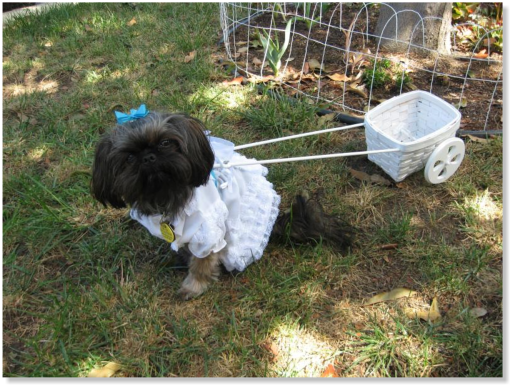
http://www.petpetalpullcart.com/
Sheryl Bass and her husband Neil Cline stumbled on an idea for a business as they were planning their wedding in 2006. Both wanted their dogs to participate in the wedding but didn't want anything that would be uncomfortable to wear or anything that would be toxic. Bass wanted her dog to fulfill the traditional "flower child" role, but no such product existed for the pet to hold the flower petals as they were distributed.
And so, Pawsitively Purrfect Products and its "Pet Petal Pullcart" was created.
It just so happens that Cline is pretty handy, Bass says. After testing various contraptions on their own pet, they came up with a wooden cart that attaches to a harness and dispenses flower petals from the back. The customizable hand-carved pull cart is for small dogs (less than 30 pounds) and sells for $130 on the company's website.
Bass and her husband, who both have full-time jobs as a publicist and psychotherapist, respectively, have hit on an explosive trend -- consumers are expected to spend nearly $53 billion on pets in 2012, according to the American Pet Products Association. Boutique businesses that offer pet outfits, treats (that literally look good enough for humans to eat) and toys are on the rise. And so is the trend of including furry loved ones in weddings.
The Pet Petal Pullcart is so popular that the couple cannot keep up with production (pull carts are made-to-order given the pet's weight and length specifications), Bass says. However, the couple has had to turn away customers, especially those looking to use the product for bigger breeds.
Bass says they hope to license the product, so that a bigger company can mass produce the item and come up with a solution to the big-breed dilemma. She also wants to add other products to the business down the line, she says.
[Via - The Street]
SafetyTats.com Story
How to Make Millions with Your Ideas: An Entrepreneur’s Guide
Crazy Startups - Hangover Bus
How To Sell A Dog For $230,000
From 0 To $30,000 A Month With Dropshipping
Up and down (and up and down) with Baltimore County internet-porn pioneers Jen and Dave
Company Name Ideas
Daily advice link - Designer? We Are Hiring!
Sunday, 15 April 2012
Baseball Cookies A Homerun
Idea Spotlight - New Startup Pays Experts To Answer Questions

http://www.cooperstowncookie.com/
Cracker Jack, peanuts, hot dogs. It almost seems like ballpark food is more exciting than the game itself. And if Pati Grady has anything to do with it, we'll soon be adding shortbread cookies to the list of iconic ballpark snacks.
In 2004, Grady searched online for a baseball cookie cutter to no avail. Improvising, she used a drinking glass to cut rounds out of dough made from her family's shortbread recipe and used a crimping tool to make stitches.
Coincidentally, the cookies were the exact size of MLB regulation baseballs, and Grady sensed that she had the seed for a new business. She incorporated and named the company Cooperstown Cookie, in honor of her hometown and the location of the National Baseball Hall of Fame and Museum.
In 2008, Cooperstown Cookie scored official licenses with Major League Baseball and the Hall of Fame, doubling sales immediately. "It changed everything," Grady said. "And with licenses, the world of wholesale opened up."
Today, she supplies her treats to stadiums across the country, from Busch Stadium in St. Louis to Seattle's Safeco Field. Grady also does a pretty brisk online business, selling cookies packaged in boxes and teams emblazoned with team logos.
[Via - CNNMoney]
SafetyTats.com Story
How to Make Millions with Your Ideas: An Entrepreneur’s Guide
Crazy Startups - Hangover Bus
How To Sell A Dog For $230,000
From 0 To $30,000 A Month With Dropshipping
Up and down (and up and down) with Baltimore County internet-porn pioneers Jen and Dave
Company Name Ideas
Daily advice link - Designer? We Are Hiring!
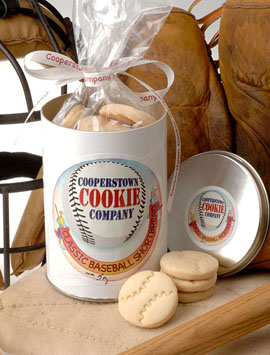
http://www.cooperstowncookie.com/
Cracker Jack, peanuts, hot dogs. It almost seems like ballpark food is more exciting than the game itself. And if Pati Grady has anything to do with it, we'll soon be adding shortbread cookies to the list of iconic ballpark snacks.
In 2004, Grady searched online for a baseball cookie cutter to no avail. Improvising, she used a drinking glass to cut rounds out of dough made from her family's shortbread recipe and used a crimping tool to make stitches.
Coincidentally, the cookies were the exact size of MLB regulation baseballs, and Grady sensed that she had the seed for a new business. She incorporated and named the company Cooperstown Cookie, in honor of her hometown and the location of the National Baseball Hall of Fame and Museum.
In 2008, Cooperstown Cookie scored official licenses with Major League Baseball and the Hall of Fame, doubling sales immediately. "It changed everything," Grady said. "And with licenses, the world of wholesale opened up."
Today, she supplies her treats to stadiums across the country, from Busch Stadium in St. Louis to Seattle's Safeco Field. Grady also does a pretty brisk online business, selling cookies packaged in boxes and teams emblazoned with team logos.
[Via - CNNMoney]
SafetyTats.com Story
How to Make Millions with Your Ideas: An Entrepreneur’s Guide
Crazy Startups - Hangover Bus
How To Sell A Dog For $230,000
From 0 To $30,000 A Month With Dropshipping
Up and down (and up and down) with Baltimore County internet-porn pioneers Jen and Dave
Company Name Ideas
Daily advice link - Designer? We Are Hiring!
Wednesday, 11 April 2012
Smart Ideas - Paul Sammut And His Ramos Alarm Clock
Need business name ideas? Visit PickyDomains.com
http://www.paulsammut.com/ramos/
There may be a lucky few who never have trouble getting up in the morning, but for everyone else, engineer and designer Paul Sammut has a new solution. Now fully funded on Kickstarter, Sammut’s new Ramos alarm clock can’t be turned off by any ordinary means; rather, users must get up and walk to an accompanying defuse panel to punch in the clock’s preset deactivation code.
There’s no “snooze” button in easy reach on the Ramos clock, which has been in development for years, Sammut says. “Ramos is a clock I made after I got tired of constantly oversleeping,” he explains. “I needed something that would force me out of bed.” No surprise, then, that the Ramos can only be turned off when the user gets up and enters in a code on a separate wireless defuse panel, which Sammut suggests be placed in the kitchen or bathroom. “You’ll have to use your brain a bit more, which will help wake you up,” he notes. “Best of all, after you turn off the alarm you’ll find yourself in your bathroom or kitchen, away from the evil alluring bed and ready to start your day.” An optional snooze mode will be included, but users won’t be able to exceed the number of “snoozes” they preset in advance.
The Ramos can now be preordered on Kickstarter starting at USD 160, with options including either an LED or nixie tube display and a variety of hardwoods and finishes. Specialty retailers around the globe: one to get in on early?
[Via - Springwise]
Weird Startups - Hangover Bus

From 0 To $30,000 A Month With Dropshipping
10 Strange But Successful Business Ideas To Inspire Your Inner Entrepreneur
How To Sell A Dog For $230,000
Will SproutSocial Become Google Of SMM?
In DC You Can Make Up To $50 An Hour Standing In Line For Others
Porn Industry Isn’t Shy About Using Crowdsourcing
How to Make Millions with Your Ideas: An Entrepreneur’s Guide by Dan S. Kennedy
How To Get Rich Selling Unicorn Meat On Amazon.com
Daily advice link - Designer? We Are Hiring!Saturday, 7 April 2012
Weird Sells - Strange Online Business Ideas That Worked.

Selling pixels on a website is a ridiculous idea but when it comes to the internet, ridiculous ideas have always been the the key to getting ridiculous amounts of money. For Alex Tew selling pixels on a website was simply supposed to be something to help him pay for college. Little did he know it would do more than that and that it would in fact help him get a head start on life and now the young man is already worth over a million dollars. Interviews on major News networks and more publicity than a 21 year old would know what to do with would follow and soon enough other people even tried to piggyback on his idea. Now that is ridiculous, ridiculously successful.
2. SantaMail.orgEach year it gets harder to convince kids that there is a real Santa Claus somewhere in the North pole. But no kid would argue if they got a reply directly from Santa himself and armed with this idea Byron Reese set out to become a real live Santa Claus for kids all over the world. Through the website SantaMail.org, kids got the chance to send their letters to ‘Santa’ at the ‘North Pole’. To get a personalized reply from Santa would cost the kids parents $9.95. This may not seem like much until you multiply it by the 300 000 responses that ‘Santa’ sent last year alone.
3. ShitMyDadSaysWhat do you get when you put together an unemployed writer living with his parents, a father with enough sarcastic remarks to make a grown up cry and a twitter account? In Justin Halpern’s experience, you get mentioned on The Daily show, a book deal and last but not least a sitcom deal. A mere 30 days after the writer started posting his father’s ‘wisdom’ on a twitter account, Justin Halpern was well on his way to a successful life without even trying.
4. WheresGeorge.comWe are always being told to wash our hands after touching money because we don’t know where the money has been. Now possible for you to know exactly where your money has been just by logging into WheresGeorge.com. This website tracks your money by allowing users to enter their zip codes and currency serial numbers. If the person who had the bill before you had already done the same, you will get to see just where your money has been. You will also be able to see where the bill is if the next owner does the same thing. The website is currently tracking nearly 200 million bills worth over a billion U.S. dollars.
5. PickyDomains.comAt the beginning of the ‘dot com’ era you could get paid thousands of dollars for a single domain name if it caught the attention of the right people. Dmitry Davydov’s success online went something like this, except he charged a measly fifty dollars for each domain name that he came up with. The buyers liked it since it was risk free and they didn’t have to pay anything if they didn’t like the name. Dmitry liked the idea because every single domain name he sold meant fifty dollars gotten doing something that he enjoyed. Soon enough The San Francisco Chronicle got wind of his story and with the fame came more customers. Crowd sourcing became the next step for Dmitry and the rest is history.
6. FindAGrave.ComVisiting famous people is a creepy hobby. Visiting them after they have passed on is the idea that Jim Tipton used to achieve success. When Jim’s ‘tombstone tourism’ came to a sudden halt after he ran out of dead celebrities to visit in his native Utah, he started FindAGrave.com; a site that was dedicated to locating the graves of people buried anywhere inside the U.S. More than enough people were happy to make use of the site and soon enough genealogy research and other paid services were being offered as well on the website.
7. Doggles.comIt may have been the world’s most worthless invention ever but to Ken and Roni di Lullo, this crazy idea turned out to be worth millions. Most dog owners would never have thought to buy sunglasses for their dogs but the moment ‘Doggles’ started to be marketed as an anti UV radiation shield, thousands of dog owners rushed to get a pair for their dogs. The result? Cool looking dogs and two new members in the millionaires club with a chain of shops in 16 countries around the world.
8. GeesePoliceInc.comIt may not be an online business but it was with the help of the internet that David Marcks managed to change a relatively simple idea into a 2 million dollar a year business. In the 1980s, David noticed two things as he worked on the golf course. First, the wild geese were proving to be quite irritating and second, his border collie was unusually effective when it came to chasing away these birds. Putting these two together, David Marcks started his very own business that now comprises 27 trucks and 32 dogs with the mission of ridding any place of wild geese.
9. BugMeNot.comMost internet users would agree that there is nothing more irritating than having to register to access a site that is already free. However, nobody would agree more to this fact than Guy King and that is why he decided to do something about it. BugMeNot.com is a free web service that was started by King to provide instant logins to free sites (like YouTube.com or NYTimes.com) and the site was a major success since many users were tired of having to waste time on pointless registration processes and having to expose their email addresses to spamming. In an ironic twist, BugMeNot.com got publicity simply because they tried to shut it down in 2004. After a simple mention of this fact in Wired magazine, the website got even more attention and was soon expanding to other niches such as Retailmenot.com.
10. ShoppingCartAbuse.ComOnly a crazy person would fall in love with an idea such as this one. Luckily for the owner of ShoppingCartAbuse.com there are plenty of crazy people out there. According to the website description, “The Center for Prevention of Shopping Cart Abuse is an organization dedicated to preventing the pervasiveness of Shopping Cart abuse”. With T-shirts and other commercial interests, the website became an instant hit and even a few Hollywood celebrities could not resist being part of this ‘campaign’.
Tuesday, 27 March 2012
Standing In Line For Other People For Fun And Profit
Book Of The Day - Start Small, Stay Small: A Developer's Guide to Launching a Startup

http://www.washingtonexpress.com/
Time is money and in DC it's apparently a lot of money. At least that's the impression I get from the service offered by Washington DC courier service called Washington Express.
The company offers to send in line for you for cool $40 an hour (and $50 an hour if it's Supreme Court).
Here is description of the service
Do you need to attend a congressional or judicial hearing but don't have the time to stand in line? Washington Express, a leader in DC area courier services, provides professional, competitively priced line-standing and seat holding services for congressional and judicial hearings.
Our rate for line standing is $40.00 per hour and Supreme Court line standing is $50 per hour. Washington Express has provided line-standing and seat-holding services for over 20 years, and in that time, we have developed significant expertise in all of the sometimes complex details of seat holding and linestanding.
The WEX Advantage
Professional line-standing team monitors hearing schedule.
Regularly surveys committee website to check for hearing relocation and postponements so that your line-standing is done at the right time and place.
Washington Express constantly checks the demand for individual hearings so we can advise line-standing start times.
Our line-standing couriers hold printed WEX signs with hearing attendees names on them for easy identification.
Apparently the servce is quite popular with DC lobbiests, because access to many places is via live queue only and they don't want to waste their billable hours standing in line.
For more unusual ways to make money, visit this site
[Via - MadConomist]
How To Get Rich Selling Unicorn Meat On Amazon.com
From 0 To $30,000 A Month With Dropshipping
Making Million Raising Wild Buffalo
YBuy.Com Tries Shareware Model With Hardware Goods.
Will SproutSocial Become Google Of SMM?

http://www.washingtonexpress.com/
Time is money and in DC it's apparently a lot of money. At least that's the impression I get from the service offered by Washington DC courier service called Washington Express.
The company offers to send in line for you for cool $40 an hour (and $50 an hour if it's Supreme Court).
Here is description of the service
Do you need to attend a congressional or judicial hearing but don't have the time to stand in line? Washington Express, a leader in DC area courier services, provides professional, competitively priced line-standing and seat holding services for congressional and judicial hearings.
Our rate for line standing is $40.00 per hour and Supreme Court line standing is $50 per hour. Washington Express has provided line-standing and seat-holding services for over 20 years, and in that time, we have developed significant expertise in all of the sometimes complex details of seat holding and linestanding.
The WEX Advantage
Professional line-standing team monitors hearing schedule.
Regularly surveys committee website to check for hearing relocation and postponements so that your line-standing is done at the right time and place.
Washington Express constantly checks the demand for individual hearings so we can advise line-standing start times.
Our line-standing couriers hold printed WEX signs with hearing attendees names on them for easy identification.
Apparently the servce is quite popular with DC lobbiests, because access to many places is via live queue only and they don't want to waste their billable hours standing in line.
For more unusual ways to make money, visit this site
[Via - MadConomist]
How To Get Rich Selling Unicorn Meat On Amazon.com
From 0 To $30,000 A Month With Dropshipping
Making Million Raising Wild Buffalo
YBuy.Com Tries Shareware Model With Hardware Goods.
Will SproutSocial Become Google Of SMM?
Daily advice link - Freelancer? We are hiring!
Sunday, 25 March 2012
Weird Profits - How To Get Rich Selling Unicorn Meat On Amazon.com

It sounds cliche, but in order to succeed you have to stand out. You may offer outstanding quality or lowest price, but more and more companies use ‘weirdness’ as their strategy. Case in point – Canned Unicorn Meat from ThinkGeek.com
Now, you probably know that unicorns don’t exist (no judgement here), but that’s exactly the point. A typical ‘product review’ reads along these lines:
Of course this isn't as good as fresh, but who has time to hunt unicorns these days? I'm a busy professional so I don't have the luxury of just grabbing my bow and quiver and spending days in the high glens hunting fresh 'corn. This product allows me to come home from a hectic day and enjoy a meal packed with that special nutrition only unicorn can provide. I even keep a few cans at the office for those late nights.
While selling ‘unicorn meat’ may seem silly to you, ThinkGeek got a ton of free publicity from the product and made over a hundred thousand dollars.
You don’t even need to come up with a wacky product in order to get attention. You may simply ‘rebrand’ your existing product. Let’s do a test – what gets your attention.
1. Hand sanitizer
2. Maybe You Touched Your Gentials Hand Sanitizer
See, I told you so.
Friday, 23 March 2012
How Birds Barbershops Took Over Entire Austin
Tip Of The Day - How To Find Any Person In US, Do Reverse Phone Lookup And Check For Criminal Records
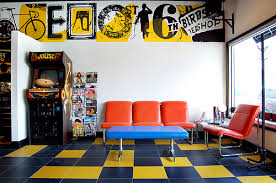
http://www.birdsbarbershop.com/
Michael Portman has heard his salon customers share information with their hairdressers that they wouldn't confide in anyone else. As he says, it's a business built on trust. After all, how many deals compel the service provider to wield a sharp pair of scissors to your scalp or neck?
Today, six years after he and childhood pal Jayson Rapaport opened the first of five Birds Barbershops in Austin, Texas, Portman is especially pleased when a customer comes in for a haircut in advance of a job interview. "That's a pretty trusting moment there," Portman says.
Like many entrepreneurs, Portman has found that savvy branding efforts go a long way toward cultivating that trust. And while there's no single formula for branding your way into a client's warm embrace, it's generally agreed that it takes more than a clever slogan or a catchy jingle. At the very least, it takes strong job performance, effective marketing (often online) and favorable public opinion. Yet experts say building trust through branding also requires an ineffable something that leaves customers feeling good about the whole exchange.
"Branding now is trying to measure not just the affinity, but the trust a consumer has in you," says Todd Copilevitz, a branding consultant in Atlanta.
To build trust through branding, says Karen Post, a Tampa, Fla.–based consultant and the author of Brand Turnaround, an entrepreneur must establish a distinct identity. Portman and Rapaport did this by offering standard haircuts at below-market prices--$19 for men, $39 for women--and keeping salons open seven days a week. ("Every salon in the world is closed on Mondays," Portman says. "What's with that?") Tapping into Austin's rich musical heritage, they installed old-fashioned jukeboxes, then turned up the volume. Because Austin is such a bicycle-crazy town, they offered men who rode to Birds a free hair wash. (Women get a shampoo with the standard cut.) And abiding by the company ethos of keeping things local, they formed myriad partnerships in support of hometown causes and events.
Their mission was simple, really: They wanted to make the haircut experience more fun. And that's where the beer comes in. After noon each day, anyone who gets a haircut at Birds receives a free can of Shiner beer. Birds pays nothing for the beer but gives Shiner plenty of promotional punch, including a neon sign in every salon window. Shiner comes from the Lone Star State's oldest independent brewery, so it holds a special place in the hearts and minds of Texans. For Portman, the arrangement has been invaluable in helping Birds establish its identity.
And that has led to success. Last year, Portman says, Birds took in nearly $3 million in revenue. Birds has relied heavily on social media to build its brand. Copilevitz says the online world, which gives consumers a robust and timely forum for expressing opinions, has forced businesses to revert to old-school customer service. "That is, dealing with people as people," he says. "They're using social media to talk to their customers in an open, honest way, and they do that on a stage where millions of eyeballs can focus on that discussion." Using social media effectively, adds Portman, also means knowing when to lay low. "We're part of the conversation, just like when you're sitting around the table with friends," he says. "You don't say anything unless you have something to say."
For more unusual ways to make money, visit this site.
[HT - Entrepreneur]
Catering To Startups - ZeroCater Story
Freelancer? We are hiring!
The Million-Dollar Idea in Everyone: Easy New Ways to Make Money from Your Interests, Insights, and Inventions
Catering To Startups - ZeroCater Story
How To Start Your Own Dropshipping Business
Cool Startups - DollarShaveClub.com
Things Called Books - Normal Gets You Nowhere
http://www.birdsbarbershop.com/
Michael Portman has heard his salon customers share information with their hairdressers that they wouldn't confide in anyone else. As he says, it's a business built on trust. After all, how many deals compel the service provider to wield a sharp pair of scissors to your scalp or neck?
Today, six years after he and childhood pal Jayson Rapaport opened the first of five Birds Barbershops in Austin, Texas, Portman is especially pleased when a customer comes in for a haircut in advance of a job interview. "That's a pretty trusting moment there," Portman says.
Like many entrepreneurs, Portman has found that savvy branding efforts go a long way toward cultivating that trust. And while there's no single formula for branding your way into a client's warm embrace, it's generally agreed that it takes more than a clever slogan or a catchy jingle. At the very least, it takes strong job performance, effective marketing (often online) and favorable public opinion. Yet experts say building trust through branding also requires an ineffable something that leaves customers feeling good about the whole exchange.
"Branding now is trying to measure not just the affinity, but the trust a consumer has in you," says Todd Copilevitz, a branding consultant in Atlanta.
To build trust through branding, says Karen Post, a Tampa, Fla.–based consultant and the author of Brand Turnaround, an entrepreneur must establish a distinct identity. Portman and Rapaport did this by offering standard haircuts at below-market prices--$19 for men, $39 for women--and keeping salons open seven days a week. ("Every salon in the world is closed on Mondays," Portman says. "What's with that?") Tapping into Austin's rich musical heritage, they installed old-fashioned jukeboxes, then turned up the volume. Because Austin is such a bicycle-crazy town, they offered men who rode to Birds a free hair wash. (Women get a shampoo with the standard cut.) And abiding by the company ethos of keeping things local, they formed myriad partnerships in support of hometown causes and events.
Their mission was simple, really: They wanted to make the haircut experience more fun. And that's where the beer comes in. After noon each day, anyone who gets a haircut at Birds receives a free can of Shiner beer. Birds pays nothing for the beer but gives Shiner plenty of promotional punch, including a neon sign in every salon window. Shiner comes from the Lone Star State's oldest independent brewery, so it holds a special place in the hearts and minds of Texans. For Portman, the arrangement has been invaluable in helping Birds establish its identity.
And that has led to success. Last year, Portman says, Birds took in nearly $3 million in revenue. Birds has relied heavily on social media to build its brand. Copilevitz says the online world, which gives consumers a robust and timely forum for expressing opinions, has forced businesses to revert to old-school customer service. "That is, dealing with people as people," he says. "They're using social media to talk to their customers in an open, honest way, and they do that on a stage where millions of eyeballs can focus on that discussion." Using social media effectively, adds Portman, also means knowing when to lay low. "We're part of the conversation, just like when you're sitting around the table with friends," he says. "You don't say anything unless you have something to say."
For more unusual ways to make money, visit this site.
[HT - Entrepreneur]
Catering To Startups - ZeroCater Story
Freelancer? We are hiring!
The Million-Dollar Idea in Everyone: Easy New Ways to Make Money from Your Interests, Insights, and Inventions
Catering To Startups - ZeroCater Story
How To Start Your Own Dropshipping Business
Cool Startups - DollarShaveClub.com
Things Called Books - Normal Gets You Nowhere
Thursday, 22 March 2012
Making Million Raising Wild Buffalo
Book of the day - The Million-Dollar Idea in Everyone: Easy New Ways to Make Money from Your Interests, Insights, and Inventions

http://wildideabuffalo.com/
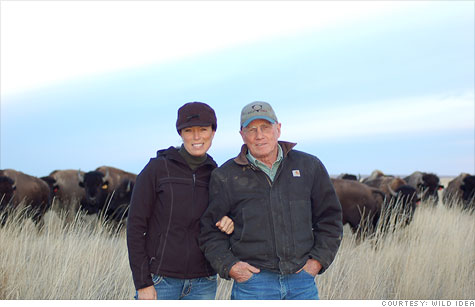
Dan O'Brien, the owner of a 3,200-acre ranch in Rapid City, S.D., had been raising a few buffalo with his wife since 1997. But the hobby was proving costly.
"We wanted to make this a better place for our (buffalo) herds," said the 64-year-old, a wildlife biologist. "The way to do that was to play the business card."
Dan decided to farm buffalo for commercial consumption.
In recent years, bison has become more popular as a healthier alternative to other red meats, because it is leaner and has lower cholesterol.
Demand for the meat grew 10 percent in 2011, the sixth straight year of double-digit growth, according to the National Buffalo Association.
Wild Idea Buffalo Co. -- which raises and processes meat from herds of bison in South Dakota -- started on a small scale in 1997.
"The first year we slaughtered three or four buffalo and sold them to family and friends," Dan said. "We sent out 50 or so boxes."
In December, Wild Idea, bolstered by the opening of their processing plant in May, crossed over the $1-million-in-revenues mark, essentially doubling its business from the year prior. To staff the new plant, they hired 10 more employees, bringing the total to 14.
"We set $1 million in 2011 as our goal," said Jill, 48, his wife and business partner. "In November, we were thinking 'Are we going to make it?'
But by December, they were sure that they would hit their goal, because of the number of gift boxes that were ordered, said Dan. Afterwards, "we did a little happy dance," he said.
Jill met Dan when he made a sales call to her Rapid City restaurant 14 years ago to sell bison. She was impressed with the quality of the meat and taste. Today, Jill, who grew up on a prairie, helps Wild Idea by developing recipes. She's also working on a cookbook.
In the past 15 years, the O'Briens have grown their herd from 13 baby buffalo to 300. They also process buffalo sourced from five other ranchers and Native Americans at a nearby reservation.
South Dakota has the most bison producers in the country. But the O'Briens are not too worried about competition. Their bison are grass-fed, free-roaming, antibiotic- and hormone-free, as well as humanely treated, creating a high quality meat, Jill said.
One of the company's largest roadblocks is shipping.
"The biggest challenge was finding out how to get it to people in an affordable fashion. That remains the one thing that we continue to work on," said Jill, who constantly checks rates for refrigerated shipments via FedEx, UPS and other means.
Enduring long days is also a challenge. "My phone starts ringing at 6:30 a.m.," said Dan, who then pursues morning chores while Jill runs over to their retail store in Rapid City. Their day is spent caring for the buffalo and managing office tasks like invoicing and marketing. It wraps up around 8 p.m.
Bringing back the buffalo population is the couple's ultimate goal. Bison were killed off in a span of 100 to 150 years, Dan said. Between 40 and 60 million bison roamed the Great Plains prior to 1600. By 1900 there were less than 1,000, and today there are around 450,000 in North America, he added.
"We're working with folks to build the herds and bring the buffalo back," said Dave Carter, executive director of the National Bison Association. "Dan has carved out a really strong area: the desire for small-scale, grass-fed production." According to the USDA, 50,000 heads of bison are processed each year, compared to 125,000 heads a day in the beef industry.
Right now "demand exceeds the supply," Carter said.
Wild Idea Buffalo's meat appears on menus at Toro in Boston and Catalyst Restaurant in Cambridge, Mass., and butchers that include Dean & DeLuca and Ottomanelli Butcher Shoppe in New York City.
"It's the only meat I eat. I'd been a vegetarian for 10 years prior to trying buffalo meat," said Steve Gully, owner of Country Meat Market in Goleta, Calif., and a buyer of Wild Idea Buffalo's bison meat for the last year. "It's a little sweeter and has an all-around good, hearty taste. On a daily basis, I'll have two or three phone calls inquiring about the bison cuts I have."
For more unusual ways to make money, visit this site.
[Via - CNNMoney.Com]
Freelancer? We are hiring!
YBuy.Com Tries Shareware Model With Hardware Goods.
One Million Dollars Invested In Shaving Razor Subscription Startup
How To Find Any Person In US And Check If They Have Criminal Record
How To Start Your Own Dropshipping Business
The Power of Habit: Why We Do What We Do in Life and Business
http://wildideabuffalo.com/
Dan O'Brien, the owner of a 3,200-acre ranch in Rapid City, S.D., had been raising a few buffalo with his wife since 1997. But the hobby was proving costly.
"We wanted to make this a better place for our (buffalo) herds," said the 64-year-old, a wildlife biologist. "The way to do that was to play the business card."
Dan decided to farm buffalo for commercial consumption.
In recent years, bison has become more popular as a healthier alternative to other red meats, because it is leaner and has lower cholesterol.
Demand for the meat grew 10 percent in 2011, the sixth straight year of double-digit growth, according to the National Buffalo Association.
Wild Idea Buffalo Co. -- which raises and processes meat from herds of bison in South Dakota -- started on a small scale in 1997.
"The first year we slaughtered three or four buffalo and sold them to family and friends," Dan said. "We sent out 50 or so boxes."
In December, Wild Idea, bolstered by the opening of their processing plant in May, crossed over the $1-million-in-revenues mark, essentially doubling its business from the year prior. To staff the new plant, they hired 10 more employees, bringing the total to 14.
"We set $1 million in 2011 as our goal," said Jill, 48, his wife and business partner. "In November, we were thinking 'Are we going to make it?'
But by December, they were sure that they would hit their goal, because of the number of gift boxes that were ordered, said Dan. Afterwards, "we did a little happy dance," he said.
Jill met Dan when he made a sales call to her Rapid City restaurant 14 years ago to sell bison. She was impressed with the quality of the meat and taste. Today, Jill, who grew up on a prairie, helps Wild Idea by developing recipes. She's also working on a cookbook.
In the past 15 years, the O'Briens have grown their herd from 13 baby buffalo to 300. They also process buffalo sourced from five other ranchers and Native Americans at a nearby reservation.
South Dakota has the most bison producers in the country. But the O'Briens are not too worried about competition. Their bison are grass-fed, free-roaming, antibiotic- and hormone-free, as well as humanely treated, creating a high quality meat, Jill said.
One of the company's largest roadblocks is shipping.
"The biggest challenge was finding out how to get it to people in an affordable fashion. That remains the one thing that we continue to work on," said Jill, who constantly checks rates for refrigerated shipments via FedEx, UPS and other means.
Enduring long days is also a challenge. "My phone starts ringing at 6:30 a.m.," said Dan, who then pursues morning chores while Jill runs over to their retail store in Rapid City. Their day is spent caring for the buffalo and managing office tasks like invoicing and marketing. It wraps up around 8 p.m.
Bringing back the buffalo population is the couple's ultimate goal. Bison were killed off in a span of 100 to 150 years, Dan said. Between 40 and 60 million bison roamed the Great Plains prior to 1600. By 1900 there were less than 1,000, and today there are around 450,000 in North America, he added.
"We're working with folks to build the herds and bring the buffalo back," said Dave Carter, executive director of the National Bison Association. "Dan has carved out a really strong area: the desire for small-scale, grass-fed production." According to the USDA, 50,000 heads of bison are processed each year, compared to 125,000 heads a day in the beef industry.
Right now "demand exceeds the supply," Carter said.
Wild Idea Buffalo's meat appears on menus at Toro in Boston and Catalyst Restaurant in Cambridge, Mass., and butchers that include Dean & DeLuca and Ottomanelli Butcher Shoppe in New York City.
"It's the only meat I eat. I'd been a vegetarian for 10 years prior to trying buffalo meat," said Steve Gully, owner of Country Meat Market in Goleta, Calif., and a buyer of Wild Idea Buffalo's bison meat for the last year. "It's a little sweeter and has an all-around good, hearty taste. On a daily basis, I'll have two or three phone calls inquiring about the bison cuts I have."
For more unusual ways to make money, visit this site.
[Via - CNNMoney.Com]
Freelancer? We are hiring!
YBuy.Com Tries Shareware Model With Hardware Goods.
One Million Dollars Invested In Shaving Razor Subscription Startup
How To Find Any Person In US And Check If They Have Criminal Record
How To Start Your Own Dropshipping Business
The Power of Habit: Why We Do What We Do in Life and Business
Wednesday, 21 March 2012
Catering To Startups - ZeroCater Story
Things Called Books - Normal Gets You Nowhere

http://zerocater.com/
If you’re one of the growing number of startups in Silicon Valley area that gets regular deliveries of catered food, you’ve probably heard of ZeroCater. And if you haven’t yet, you should: The startup is quickly becoming the go-to place for handling all the logistics of ordering lunch (and other meals). With a flexible delivery schedule and a huge number of food vendors that it’s partnered with, it could be the easiest and most efficient way to make sure your office gets fed.
What I really love about ZeroCater, though, is the story: It’s all about one dude with some entrepreneurial drive that created a business by solving a problem for himself, then offering up a solution to others.
ZeroCater founder and CEO Arram Sabeti moved to the Bay Area after becoming a bit obsessed with Paul Graham’s essays. Sabeti wanted to work in startups, so he saved up some cash, got a place in the East Bay and just started looking for work. He landed at Justin.tv, where he says he handled a lot of the office management, QA and all sorts of other things that no one else wanted to do.
While at Justin.tv he handled daily lunch orders for the startup, which was routinely the most problematic part of his job. From talking to other folks in similar positions, he found out he wasn’t alone — dealing with catering was a huge pain for everyone who handle such things. So he took on another startup client and began outsourcing his expertise to Justin.tv as well.
At first, ZeroCater was just Sabeti, a bunch of hustle, and a spreadsheet with about 500 columns in it. Then he brought on CTO Bill Moorier to build some code to automate some things. Like invoicing, for instance: Prior to getting a software platform in place for managing accounts, Sabeti was spending some 20 hours a week just filing invoices for various companies he worked with. With that simplified, the business began to operate a lot more smoothly and started to grow.
ZeroCater was part of last spring’s YCombinator class and raised $1.5 million last summer from investors like Keith Rabois, SV Angel, Start Fund, Stewart Alsop, Justin.tv founders Justin Kan and Emmett Shear, Alexander Goldstein and Starling Ventures. With financing in hand, it’s been aggressively expanding within the Bay Area: In the past eight months, ZeroCater has grown from three employees to 15, with six account managers and two salespeople now on board.
That’s translated into some real business, as ZeroCater is expanding beyond just word-of-mouth marketing and serving startups, and branching out into other verticals. It serves about 175 companies a month, offering a rotating menu from various caterers, restaurants and food trucks around San Francisco. Those companies range in size and in the volume of business they drive: Some are multinational corporations that you know and love, while others are startups you’ve never heard of; some order just a few meals a month, while others get food catered everyday. For taking care of all their catered food needs, ZeroCater charges just a 7 percent convenience fee on all orders.
On the vendor side, working with ZeroCater means regular business for a number of food service operators that otherwise would be reliant on the whims and fancy of the general public. In exchange for volume discounts, ZeroCater provides a steady stream of orders for a number of local businesses.
While ZeroCater has cut its teeth serving the Bay Area, Sabeti tells me he hopes to take this business worldwide. And there’s plenty of interest: ZeroCater has a waiting list of more than 165 companies in major metropolitan areas around the country. ZeroCater’s next market has yet to be determined, but it’s clear that the lunch problem is pretty universal, whether it’s a matter of feeding a 15-person startup or a large financial services company.
[Via - GigaOm]
The Professional Caterer's Handbook: How to Open and Operate a Financially Successful Catering Business
Freelancer? We are hiring!
Start Small, Stay Small: A Developer's Guide to Launching a Startup
And Where Is MrsBeer?
Cool Startups - DollarShaveClub.com
Mint.Com Success Story
http://zerocater.com/
If you’re one of the growing number of startups in Silicon Valley area that gets regular deliveries of catered food, you’ve probably heard of ZeroCater. And if you haven’t yet, you should: The startup is quickly becoming the go-to place for handling all the logistics of ordering lunch (and other meals). With a flexible delivery schedule and a huge number of food vendors that it’s partnered with, it could be the easiest and most efficient way to make sure your office gets fed.
What I really love about ZeroCater, though, is the story: It’s all about one dude with some entrepreneurial drive that created a business by solving a problem for himself, then offering up a solution to others.
ZeroCater founder and CEO Arram Sabeti moved to the Bay Area after becoming a bit obsessed with Paul Graham’s essays. Sabeti wanted to work in startups, so he saved up some cash, got a place in the East Bay and just started looking for work. He landed at Justin.tv, where he says he handled a lot of the office management, QA and all sorts of other things that no one else wanted to do.
While at Justin.tv he handled daily lunch orders for the startup, which was routinely the most problematic part of his job. From talking to other folks in similar positions, he found out he wasn’t alone — dealing with catering was a huge pain for everyone who handle such things. So he took on another startup client and began outsourcing his expertise to Justin.tv as well.
At first, ZeroCater was just Sabeti, a bunch of hustle, and a spreadsheet with about 500 columns in it. Then he brought on CTO Bill Moorier to build some code to automate some things. Like invoicing, for instance: Prior to getting a software platform in place for managing accounts, Sabeti was spending some 20 hours a week just filing invoices for various companies he worked with. With that simplified, the business began to operate a lot more smoothly and started to grow.
ZeroCater was part of last spring’s YCombinator class and raised $1.5 million last summer from investors like Keith Rabois, SV Angel, Start Fund, Stewart Alsop, Justin.tv founders Justin Kan and Emmett Shear, Alexander Goldstein and Starling Ventures. With financing in hand, it’s been aggressively expanding within the Bay Area: In the past eight months, ZeroCater has grown from three employees to 15, with six account managers and two salespeople now on board.
That’s translated into some real business, as ZeroCater is expanding beyond just word-of-mouth marketing and serving startups, and branching out into other verticals. It serves about 175 companies a month, offering a rotating menu from various caterers, restaurants and food trucks around San Francisco. Those companies range in size and in the volume of business they drive: Some are multinational corporations that you know and love, while others are startups you’ve never heard of; some order just a few meals a month, while others get food catered everyday. For taking care of all their catered food needs, ZeroCater charges just a 7 percent convenience fee on all orders.
On the vendor side, working with ZeroCater means regular business for a number of food service operators that otherwise would be reliant on the whims and fancy of the general public. In exchange for volume discounts, ZeroCater provides a steady stream of orders for a number of local businesses.
While ZeroCater has cut its teeth serving the Bay Area, Sabeti tells me he hopes to take this business worldwide. And there’s plenty of interest: ZeroCater has a waiting list of more than 165 companies in major metropolitan areas around the country. ZeroCater’s next market has yet to be determined, but it’s clear that the lunch problem is pretty universal, whether it’s a matter of feeding a 15-person startup or a large financial services company.
[Via - GigaOm]
The Professional Caterer's Handbook: How to Open and Operate a Financially Successful Catering Business
Freelancer? We are hiring!
Start Small, Stay Small: A Developer's Guide to Launching a Startup
And Where Is MrsBeer?
Cool Startups - DollarShaveClub.com
Mint.Com Success Story
Saturday, 17 March 2012
From Hobby Calligraphist To Home Based Business
Book Of The Day - Work at Home Now: The No-nonsense Guide to Finding Your Perfect Home-based Job, Avoiding Scams, and Making a Great Living

http://robbiecrawfordstudio.com
The moment Robbie Crawford touched a calligraphy pen to paper, she fell in love with the beautiful form of handwritten expression.
That was more than 30 years ago.
Now, at the age of 60 and after 36 years in nursing, Crawford has finally chosen to do what she loves.
She retired from her nursing career in September to start her own full-time calligraphy and engraving business out of her Tallassee home in Blount County.
"I decided when I retire that I would do something I would love to do for the rest of my life," Crawford said. "This is so much fun, so much fun."
The baby boomer spends her days writing fancy letters on certificates, addressing wedding invitations and using a dentist's drill to engrave calligraphy on wine bottles and decorative stones.
After years of doing calligraphy work sporadically, never believing she could make a career of it, she said she finally took the plunge because nursing had become difficult and exhausting. She worked night shift on the oncology floor at Blount Memorial Hospital the past nine years.
"The hours were horrible," Crawford said. "I thought, 'You know what? I'm going to do it.' I knew I had the talent. I knew I had the skill. Plus, it's marketable. People always want something personalized."
Crawford first learned calligraphy as a 26-year-old working in Memphis. During one of her women's Bible study meetings, a member taught calligraphy.
"You don't have to have good handwriting," Crawford said. "Calligraphy is an acquired skill. The more you practice the better you get."
It's all in how someone holds the pen, she said.
When she first started, she thought
she was good, but now she laughs at how "primitive" her first tries were.
She began practicing every day for about an hour. That's about all she could do without her hand cramping.
It took eight years for her to become comfortable enough to sell her calligraphy work.
She had several successful years doing calligraphy part-time while still working as a nurse.
At one point, a greeting card company offered her $5,000 for rights to a print she did with the story of Jesus written in calligraphy in the form of a Christmas tree. They wanted to put it on a Christmas card, but Crawford didn't sell it. She still uses it today for her own work.
When she and her husband moved to Chicago for her husband's work, she lost her calligraphy contacts and stopped selling her work.
The couple moved to the Maryville area in 2001 because they wanted to move back to Tennessee.
While working at Blount Memorial, she did calligraphy for family and friends about once a month, keeping her skills fresh.
She put a small calligraphy studio in her basement complete with a writing desk, a filing cabinet of hundreds of her prints and framing equipment.
She recently added an engraving station.
She never thought of engraving before she heard of an engraving course given by Ken Brown, a widely recognized calligrapher.
When she teaches calligraphy at local art stores, she uses Brown's book. She took a short course on engraving in Dallas in November and since then has been hooked.
"I can't keep away from this engraver," Crawford said. "I engrave all the time. Even if I don't have an order, I just engrave glass."
Some of her favorite items to engrave are wine bottles and small stones on which she engraves people's names. She said the stones are perfect wedding favors.
She personalizes perfume bottles and has even engraved golf clubs.
As part of her new business, she also attends bridal shows, perfume events and craft fairs promoting her business.
She keeps a calligraphy pen in her purse so she can write people's names on the spot.
The best part of this venture, she said, is that she doesn't have to watch the clock to see when she has to leave for work.
She has more time to spend with her husband, fish and hunt for rocks in the woods with her grandson.
"I wake up happy and excited to get down here," Crawford said. "My life is my own for the first time in a lot of years."
For more unusual ways to make money, visit this site.
[Via - KnoxNews.Com]
Cool Startups - Scoot Networks
Advertise Here For Only $1
Advertising platform connects brands with influential Instagram users
How to Make Millions with Your Ideas: An Entrepreneur's Guide by Dan S. Kennedy
Cool Startups - SitterCity.Com

http://robbiecrawfordstudio.com
The moment Robbie Crawford touched a calligraphy pen to paper, she fell in love with the beautiful form of handwritten expression.
That was more than 30 years ago.
Now, at the age of 60 and after 36 years in nursing, Crawford has finally chosen to do what she loves.
She retired from her nursing career in September to start her own full-time calligraphy and engraving business out of her Tallassee home in Blount County.
"I decided when I retire that I would do something I would love to do for the rest of my life," Crawford said. "This is so much fun, so much fun."
The baby boomer spends her days writing fancy letters on certificates, addressing wedding invitations and using a dentist's drill to engrave calligraphy on wine bottles and decorative stones.
After years of doing calligraphy work sporadically, never believing she could make a career of it, she said she finally took the plunge because nursing had become difficult and exhausting. She worked night shift on the oncology floor at Blount Memorial Hospital the past nine years.
"The hours were horrible," Crawford said. "I thought, 'You know what? I'm going to do it.' I knew I had the talent. I knew I had the skill. Plus, it's marketable. People always want something personalized."
Crawford first learned calligraphy as a 26-year-old working in Memphis. During one of her women's Bible study meetings, a member taught calligraphy.
"You don't have to have good handwriting," Crawford said. "Calligraphy is an acquired skill. The more you practice the better you get."
It's all in how someone holds the pen, she said.
When she first started, she thought
she was good, but now she laughs at how "primitive" her first tries were.
She began practicing every day for about an hour. That's about all she could do without her hand cramping.
It took eight years for her to become comfortable enough to sell her calligraphy work.
She had several successful years doing calligraphy part-time while still working as a nurse.
At one point, a greeting card company offered her $5,000 for rights to a print she did with the story of Jesus written in calligraphy in the form of a Christmas tree. They wanted to put it on a Christmas card, but Crawford didn't sell it. She still uses it today for her own work.
When she and her husband moved to Chicago for her husband's work, she lost her calligraphy contacts and stopped selling her work.
The couple moved to the Maryville area in 2001 because they wanted to move back to Tennessee.
While working at Blount Memorial, she did calligraphy for family and friends about once a month, keeping her skills fresh.
She put a small calligraphy studio in her basement complete with a writing desk, a filing cabinet of hundreds of her prints and framing equipment.
She recently added an engraving station.
She never thought of engraving before she heard of an engraving course given by Ken Brown, a widely recognized calligrapher.
When she teaches calligraphy at local art stores, she uses Brown's book. She took a short course on engraving in Dallas in November and since then has been hooked.
"I can't keep away from this engraver," Crawford said. "I engrave all the time. Even if I don't have an order, I just engrave glass."
Some of her favorite items to engrave are wine bottles and small stones on which she engraves people's names. She said the stones are perfect wedding favors.
She personalizes perfume bottles and has even engraved golf clubs.
As part of her new business, she also attends bridal shows, perfume events and craft fairs promoting her business.
She keeps a calligraphy pen in her purse so she can write people's names on the spot.
The best part of this venture, she said, is that she doesn't have to watch the clock to see when she has to leave for work.
She has more time to spend with her husband, fish and hunt for rocks in the woods with her grandson.
"I wake up happy and excited to get down here," Crawford said. "My life is my own for the first time in a lot of years."
For more unusual ways to make money, visit this site.
[Via - KnoxNews.Com]
Cool Startups - Scoot Networks
Advertise Here For Only $1
Advertising platform connects brands with influential Instagram users
How to Make Millions with Your Ideas: An Entrepreneur's Guide by Dan S. Kennedy
Cool Startups - SitterCity.Com
Daily advice - Freelancer? We are hiring!
Wednesday, 14 March 2012
It's Not Just Beer, It's MrBeer.
Web 2.0 Names - A Sooper Smpl Xuide

http://MrBeer.com
“Not bad. In fact, my first home brew wasn’t as good as this.”
That was Garrett Oliver, Brewmaster of Brooklyn Brewery, and what he had to say when he gave a MrBeer beer kit a try for himself. And believe us—he wasn't drunk when he said that.
Oliver described the “Mr. Beer Process” in three steps: "We sanitize, we brew, and then we bottle."
And how much did it cost him to make a 2-gallon beer?
It took him $40 for the complete kit—and a 2-gallon beer worth $.25 cents to $1, depending on the size of the bottle that’s being used.
That's not bad, considering it tastes good. Comedian Andy Dick once had a test run of the Mr. Beer as well, and all he had to say was: "That's smooth. That's probably the smoothest beer I've ever drank." And unlike those that have been shipped and exposed to outside air, Mr. Beer’s aroma is more intense because it comes straight from the plastic beer keg.
Mr. Beer has been in the business of creating the world's easiest home brewing systems and supplies since 1993. They use barley, wheat, and hops for their malts, and are brewed on their modern facility on South Island NZ. They use a complex process of cracking, heating, and separating grains and then adding in hops to produce the color, balance, and flavor that beer is known for. However, the difference is that with Mr. Beer, all the excess water is removed, and the concentrated malt extract that’s left would be canned for shipping.
Their most popular product is the Premium Edition Mr. Beer Kit, which comes with a 2-Gallon Fermenter, first batch of beer (Standard Booster Recipe with Hopped Malt extract, dry brewing yeast, and No-Rinse Cleanser), eight amber-colored bottles with caps and labels. These bottles are designed to accommodate carbonated beverages, and are FDA approved.
Other Mr. Beer products also include Cider Kits a nd Root Beer kits—and they taste good as well.
With such high-tech procedures, does it guarantee perfect beer all the time?
Not necessarily. It depends on how you brew it.
"It's a little bit sweet and needs a little bit more carbonation." Oliver observed, after tasting his first batch of beer.
But here’s where he made a teeny-tiny-itsy-bit mistake: he didn’t wait long enough for the beer to ferment.
A good way to avoid this is to let the beer sit longer than a week to reduce its sweetness. The longer it ferments, the less sweet it becomes.
As with everything else, patience really IS a virtue when it comes to brewing your own beer. According to Drew Vics, a.k.a "The Brewologist", you can have home brewed beer in two weeks, but if you want it to taste its best, then wait for four weeks—or three and a half, if you can't wait any longer.
A good solution for that "le ss head" or "less carbonation" problem so often encountered by first-time brewers is to dissolve no more than 3/8 of a cup of sugar or confectioner's corn sugar into 1 pint of hot water and then let it cool. Then divide them evenly among your bottles instead of adding each sugar in each bottle (as what the direction says). This results in better and more even carbonation.
Really, it doesn’t get any simpler than that. Vics put it succinctly: "Mr. Beer makes a good beginner home brewing kit, and it is a great kit to keep around and reuse, even for the more advanced brewer. This is a great way to get your feet wet, and learn the basics of the home brewing process."
For Mr. Beer coupons, click here.
[Via - Odd News]
* - do you own a web-based business? We'd like to profile your business, too.
The Million-Dollar Idea in Everyone: Easy New Ways to Make Money from Your Interests, Insights, and Inventions
10+ Unusual Ways To Make Easy Money On The Internet If You Love Writing.
5 Coolest Beer Records
15 Most Common Myths And Misconceptions About Beer
101 Businesses You Can Start With Less Than One Thousand Dollars: For Stay-at-Home Moms & Dads
Make Your Ideas Mean Business
Link Of The Day - Product Naming
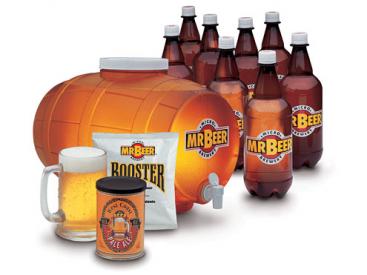
http://MrBeer.com
“Not bad. In fact, my first home brew wasn’t as good as this.”
That was Garrett Oliver, Brewmaster of Brooklyn Brewery, and what he had to say when he gave a MrBeer beer kit a try for himself. And believe us—he wasn't drunk when he said that.
Oliver described the “Mr. Beer Process” in three steps: "We sanitize, we brew, and then we bottle."
And how much did it cost him to make a 2-gallon beer?
It took him $40 for the complete kit—and a 2-gallon beer worth $.25 cents to $1, depending on the size of the bottle that’s being used.
That's not bad, considering it tastes good. Comedian Andy Dick once had a test run of the Mr. Beer as well, and all he had to say was: "That's smooth. That's probably the smoothest beer I've ever drank." And unlike those that have been shipped and exposed to outside air, Mr. Beer’s aroma is more intense because it comes straight from the plastic beer keg.
Mr. Beer has been in the business of creating the world's easiest home brewing systems and supplies since 1993. They use barley, wheat, and hops for their malts, and are brewed on their modern facility on South Island NZ. They use a complex process of cracking, heating, and separating grains and then adding in hops to produce the color, balance, and flavor that beer is known for. However, the difference is that with Mr. Beer, all the excess water is removed, and the concentrated malt extract that’s left would be canned for shipping.
Their most popular product is the Premium Edition Mr. Beer Kit, which comes with a 2-Gallon Fermenter, first batch of beer (Standard Booster Recipe with Hopped Malt extract, dry brewing yeast, and No-Rinse Cleanser), eight amber-colored bottles with caps and labels. These bottles are designed to accommodate carbonated beverages, and are FDA approved.
Other Mr. Beer products also include Cider Kits a nd Root Beer kits—and they taste good as well.
With such high-tech procedures, does it guarantee perfect beer all the time?
Not necessarily. It depends on how you brew it.
"It's a little bit sweet and needs a little bit more carbonation." Oliver observed, after tasting his first batch of beer.
But here’s where he made a teeny-tiny-itsy-bit mistake: he didn’t wait long enough for the beer to ferment.
A good way to avoid this is to let the beer sit longer than a week to reduce its sweetness. The longer it ferments, the less sweet it becomes.
As with everything else, patience really IS a virtue when it comes to brewing your own beer. According to Drew Vics, a.k.a "The Brewologist", you can have home brewed beer in two weeks, but if you want it to taste its best, then wait for four weeks—or three and a half, if you can't wait any longer.
A good solution for that "le ss head" or "less carbonation" problem so often encountered by first-time brewers is to dissolve no more than 3/8 of a cup of sugar or confectioner's corn sugar into 1 pint of hot water and then let it cool. Then divide them evenly among your bottles instead of adding each sugar in each bottle (as what the direction says). This results in better and more even carbonation.
Really, it doesn’t get any simpler than that. Vics put it succinctly: "Mr. Beer makes a good beginner home brewing kit, and it is a great kit to keep around and reuse, even for the more advanced brewer. This is a great way to get your feet wet, and learn the basics of the home brewing process."
For Mr. Beer coupons, click here.
[Via - Odd News]
* - do you own a web-based business? We'd like to profile your business, too.
The Million-Dollar Idea in Everyone: Easy New Ways to Make Money from Your Interests, Insights, and Inventions
10+ Unusual Ways To Make Easy Money On The Internet If You Love Writing.
5 Coolest Beer Records
15 Most Common Myths And Misconceptions About Beer
101 Businesses You Can Start With Less Than One Thousand Dollars: For Stay-at-Home Moms & Dads
Make Your Ideas Mean Business
Link Of The Day - Product Naming
Monday, 12 March 2012
Cool Startups - ScootNetworks.Com
Save-A-Link - $99 Logo Coupon For 99Designs.Com

http://www.scootnetworks.com/
Scoot Networks wants to be the Zipcar of electric scooters. Scoot unveiled its service, still in a closed "alpha" testing period at the Launch conference in San Francisco, the location where Scoot will initially kick off its service.
Scoot is targeted at regular urban commuters who might otherwise attempt to dash around the city via taxi, bus or train, as well as those who might use the service to get around town only once in awhile. What's more, the scooters are controlled by your smartphone—you can reserve a car through an app on your iPhone, and then the phone in effect becomes your key, and dashboard. The scooter starts when you plug in the phone.
The company says it is a hybrid of three new but proven technologies: Chinese electric motorbikes (tens of millions are on the road, growing by over 10 million per year); European bike sharing (hundreds of cities have deployed such systems in recent years); and real-time, mobile transportation services (e.g. GetAround, Uber). The scooters top out at about 30 mph.
Scoot Networks expects to charge about $5 an hour for a trip, though monthly deals will be available for regular riders. At the start, users will only be able to reserve round-trips. Scoot will provide helmets, and handle theft and insurance requirements.
The company comes out of a GreenStart accelerator program, which helps entrepreneurs build clean tech initiatives. Scoot certainly found a favorable audience at Launch. Tim Young, the co-founder of About.me and one of the judges evaluating start-ups at the event, offered to write Scoot a $50,000 check on stage.
[Via - USAToday, НТ - BeerCoupons]
Niche Advertising: World’s First Interactive Billboard
Normal Gets You Nowhere
How One Couple Turned From Teaching To Filling Ink Cartriges (And Made A Million Meanwhile)
How Tyler Johnson Gets Millions, Builing Wilderness Trails
101 Businesses You Can Start With Less Than One Thousand Dollars: For Stay-at-Home Moms & Dads
How Motorcycle Designer Erik Buell Got His Vroom Back, Post Harley-Davidson

http://www.scootnetworks.com/
Scoot Networks wants to be the Zipcar of electric scooters. Scoot unveiled its service, still in a closed "alpha" testing period at the Launch conference in San Francisco, the location where Scoot will initially kick off its service.
Scoot is targeted at regular urban commuters who might otherwise attempt to dash around the city via taxi, bus or train, as well as those who might use the service to get around town only once in awhile. What's more, the scooters are controlled by your smartphone—you can reserve a car through an app on your iPhone, and then the phone in effect becomes your key, and dashboard. The scooter starts when you plug in the phone.
The company says it is a hybrid of three new but proven technologies: Chinese electric motorbikes (tens of millions are on the road, growing by over 10 million per year); European bike sharing (hundreds of cities have deployed such systems in recent years); and real-time, mobile transportation services (e.g. GetAround, Uber). The scooters top out at about 30 mph.
Scoot Networks expects to charge about $5 an hour for a trip, though monthly deals will be available for regular riders. At the start, users will only be able to reserve round-trips. Scoot will provide helmets, and handle theft and insurance requirements.
The company comes out of a GreenStart accelerator program, which helps entrepreneurs build clean tech initiatives. Scoot certainly found a favorable audience at Launch. Tim Young, the co-founder of About.me and one of the judges evaluating start-ups at the event, offered to write Scoot a $50,000 check on stage.
[Via - USAToday, НТ - BeerCoupons]
Niche Advertising: World’s First Interactive Billboard
Normal Gets You Nowhere
How One Couple Turned From Teaching To Filling Ink Cartriges (And Made A Million Meanwhile)
How Tyler Johnson Gets Millions, Builing Wilderness Trails
101 Businesses You Can Start With Less Than One Thousand Dollars: For Stay-at-Home Moms & Dads
How Motorcycle Designer Erik Buell Got His Vroom Back, Post Harley-Davidson
Sunday, 11 March 2012
Doba Review
Daily advice link - Freelancer? We are hiring!

Have you ever thought about setting up your own online store but got put off by the necessary paperwork, a need of big financial investment and too much potential risk? Well, have you ever heard of drop-shipping? Exactly. It’s a way of moving goods from the manufacturer directly to the retailer without going through the usual distribution channels. There are many companies on the market offering drop-shipping softwares and solutions; one of them is Doba from the United States, the industry leader.
Jeremy Hanks, the Co-Founder and Chairman of Doba, explains how it works. “We’ve provided a web platform so that small-business retailers that are selling predominantly through e-commerce can come online and access an inventory and fulfillment system. We help retailers find products to sell and help wholesale providers find retailers to distribute their products.”
According to Doba, all you need to do is find the products you want to sell, list products for sale across the web and fulfill orders without having to store, pack or ship anything. They guarantee the lowest drop-ship price. And they also provide a Money Back Guarantee in case you’re unable to recoup on your initial purchase in product sales by the end of your membership.
At the moment, you can choose three different subscriptions depending on various options like supplier access (core or pro), size of your inventory (between 1K and 25K), Pre-Pay possibility (on or off) and Elite Seller Report feature (on or off). There is Doba ($59.95 per month or $599.50 per year), Doba Advanced ($69.95 per month or $699.50 per year) and Doba Pro ($89.95 per month or $899.50 per year.
Once signed in, you’re going to have access to more than one and a half million products consolidated into one catalogue which you can search through by category, brand, price etc. You’re going to create your own Inventory List which you can customize and edit according to your needs. You’re going to be able to Push to Facebook and eBay. You’re going to have access to training materials, special deals and many other available features. It’s too good not to try it.
And you can try it any time and for free! The company is now offering a 7-day trial (here is a coupon for 14-day free trial). You provide your email address (future username) and create a password, fill in your contact and credit card details in case any sales are billed during this period. You can sign in from any country all over the world; however, Doba only operates within the United States. This means that all your activity, i.e. sales, marketing and client service is going to be focused and operating in the U.S. Taking under consideration that the U.S Retail Industry operates in trillions of Dollars, there’s plenty of market share for everybody.
For more unusual ways to make money, visit this site.
[Via - Madconomist.Com]
* - do you own a web-based business? We'd like to profile your website, too.
Quiet: The Power of Introverts in a World That Can't Stop Talking
What Matters Now: How to Win in a World of Relentless Change, Ferocious Competition, and Unstoppable Innovation
How Tyler Johnson Gets Millions, Builing Wilderness Trails
Zipz Shoes Success Story
Sauceaholic
Cool Startups - ReGreenCorp.Com
How to Make Millions with Your Ideas: An Entrepreneur's Guide by Dan S. Kennedy
101 Businesses You Can Start With Less Than One Thousand Dollars: For Stay-at-Home Moms & Dads
Make Your Ideas Mean Business
Site of the day - PickyDomains.com, world's first risk free naming agency
Subscribe to:
Posts (Atom)