Showing posts with label craft. Show all posts

Tuesday, 14 August 2012

Olympic Entrepreneurs - Nick LaCave/Chocomize

Hot Tips - The Best Free Business Tool You (Probably) Don't Know About.


http://www.chocomize.com/

Olympic achievement: Competing in men's rowing, 2012

Making his Olympic debut this year, Nick LaCava is one of three co-founders of Chocomize, a custom chocolate bar company.

With college buddies Eric Heinbockel and Fabian Kaempfer, LaCava launched the company in 2009, when the three couldn't find jobs after graduation. He continued to train for rowing while starting the business, unsure if the Olympics would ever be within reach.

"Sometimes the last thing you want to do after a hard training session is go to work, but I always enjoyed my time at Chocomize, and it gave me a way to take my mind off of rowing," he said.

The Chocomize trio saw opportunity in the candy business, particularly one that was customized to customers' tastes.

The problem? "We didn't know anything about making chocolate--although I have a notorious sweet tooth--but we figured it out pretty quickly and got things up and running in a short period of time," he said.

With Chocomize, customers can add up to five different toppings to their milk, dark or white chocolate. The toppings include marshmallows, cayenne pepper, gummy bears and even crystallized rose petals. And the possible combinations are (almost) endless: More than 300 million, to be exact.

But last year, LaCava made a tough decision to leave Chocomize in order to focus on training for the games. "It was a hard choice because making the Olympics was never a guarantee and things were going really well at Chocomize," he said. "Making the Olympics was something that I had been dreaming [about] and working [toward] for many years and I felt that if I didn't give it 100% of my focus I would regret it the rest of my life."

LaCava's team of four didn't medal in London, but they placed 8th overall and he was able to live out his Olympic dream.

Meanwhile, Chocomize continues on its path of success. The business increased its sales by almost 100% between 2010 and 2011, Kaempfer said.

[Via - CNNMoney.Com]

PickyDomains - startup that caught everyone by surprise

The Coolest Facebook Business Tool You Probably Never Heard About

The (Evergrowing) List Of Cool Bootstrapping Sites

From 0 To $30,000 A Month With Dropshipping

My Name Is Beer, Mr.Beer

Lifehacks - Convert Reward Points On Your Card To Dollars In Your PayPal Account

Off the Books: The Underground Economy of the Urban Poor

Cool Apps - Nexercise

Daily Advice Link - Free Logo Service


Saturday, 7 July 2012

Women Startups - CardCubby.com

Daily Advice Link - Free Logo Service


http://www.cardcubby.com/

Wendy Krepak and her husband made a comfortable living in real estate for 26 years. While both of them were making healthy salaries, Wendy always liked using gift cards, point cards and rewards cards, but she was beginning to find that keeping them organized was easier said than done. That's when Wendy came up with a little invention of her own to help her organize those cards.

By inserting an alphabetical filing system in to a small purse, she was simply trying to organize things for herself. But soon others began to notice her using her little invention and asking where she got it. She quickly realized she might have stumbled onto something. So Wendy put a plan together and began producing and selling what she called the "Card Cubby." And it was a good thing she did, because soon thereafter -- and without severance or much notice -- both she and her husband were laid off from their real estate jobs.

Suddenly, in hot water, Wendy decided to invest even more in her idea and she and her husband raided their 401Ks in order to build the business. It was a risky gamble, but within the first 18 months, they had done $1.5 million in sales. Wendy's courage and belief paid off, and today the Card Cubby is a multi-million-dollar business.

[Via - HuffPost.com]

How To Crowdsource Ideas With Quirky.Com

Coupon reselling site makes millions

The Coolest Facebook Business Tool You Probably Never Heard About

The (Evergrowing) List Of Cool Bootstrapping Sites

From 0 To $30,000 A Month With Dropshipping

10 Great Books About Underground Economy, Working Under The Table And Surviving When Economy Sucks


101 Businesses You Can Start With Less Than One Thousand Dollars: For Stay-at-Home Moms and Dads

My Name Is Beer, Mr.Beer

Daily Advice Link - How I Increased Sales 350% With Press-Releases

Saturday, 2 June 2012

Startup Buzz - PrintLuna.com

LifeHacks - How To Use Bitrix24.Com As A Free CRM, Intranet And Task Manager.


http://printluna.com

If you love to read, you know that books are a treasure. And if you're somebody who loves to collect memories through photographs, you know that photo books to share with family and friends can be a source of joy and inspiration.

Novels, art portfolios, photo collections - if you love the value they bring and hope to create your own one day, either to keep, share, even sell, PrintLuna, in collaboration with Paro Printing, helps you turn that aspiration into reality. Launched in 2010, PrintLuna is an online service that assists creative people in designing, publishing and selling their own books.

Creating a book has never been as easy, economical and fast as PrintLuna's free online book builder. After selecting your book layout and trim size, you directly proceed with creating your very own book. Once the design layout is chosen, you have creative freedom to edit page layouts, photo positions, text, etc. Always remember, the book's final quality is dependent on the experience and professionalism of the people you entrust your book with, and PrintLuna promises to provide users with an unwavering focus on superior craftsmanship.

Aside from designing and publishing your book online with no need for download, other perks PrintLuna offers include selling your book at no extra charge, getting your book delivered to your doorstep, turning your book into a gift friends and family will love, receiving promotions for special events and a whole lot more.

So if you want books you can truly be proud of and more, it won’t hurt to give PrintLuna a try.

[Via - NicheGeek.Com]

BitrixSoft Enters Social Intranet Maket, Hopes To Woo Small Businesses With Free CRM And Task Manager

How I Increased Sales 350% With Press-Release

Bootstrapping 101: Tips to Build Your business with Limited Cash and Free Outside Help

From 0 To $30,000 A Month With Dropshipping

Love Saving? You'll Love These Seven Sites.

Need To Make A Quick Buck? Copy This Post!

Cool Inventions - Meyer Sound Laboratory

Daily advice link - Freelancer? We are hiring!

Sunday, 20 May 2012

The Business Of Design - The Macbeth Collection Story

Daily Advice Link - Free Logo Service


http://themacbethcollection.com/

Company: The Macbeth Collection
Location: Dayton, N.J.
Annual sales: $26 million

Dress designer Margaret Josephs decided to be a full-time mom soon after having her son in 1996. "I couldn't take being away from him," she said. At the time, Josephs was also looking after her three stepchildren.

"My home was cluttered all the time. I decided I needed a storage solution," she said. And while she was at it, she decided to start a decorative storage products business.

In 1998, Josephs pursued her first idea -- decorative metal buckets. She went to Home Depot, bought a few plain metal buckets and painted them. She supplied 20 to a local store. "They sold out in two days," she said. "I thought I was on to something."

Josephs expanded from buckets to painted and decoupage trays, and other home accessories. A year later, orders were coming in so quickly that Josephs recruited her nanny and others in the neighborhood to make the products.

In 2000, she got her first big order, $40,000, and the business "exploded," she said. Two years later, "The Macbeth Collection" -- a name she picked because it sounded regal -- crossed $1 million in sales.

Her business today generates about $30 million from licensing agreements and direct sales. Her products are sold in major retail stores such as Barnes & Noble, Bed, Bath & Beyond, and soon in Target.

While she's enjoying her success, Josephs admits it's been hard to juggle being a mom and an entrepreneur. She's made it work because "women are amazing multitaskers," she said.

Her now 16-year-old son is "so proud," she said. "He calls me the 'Rock & Roll Martha Stewart.'

[Via - CNNMoney.Com]

Hot Startups - PunchCast.Com Review

Subscription Based Startups - Citrus Lane

New Free App Helps Business Owners Predict Sales Depending On Weather Forecasts

How's That For A Crazy Business Idea (Salvador Dali Watch)?

BizHacks - How To Get Free CRM For Your Small Business

Travel Startups - JetRadar.Com

Bootstrapping 101: Tips to Build Your business with Limited Cash and Free Outside Help

From 0 To $30,000 A Month With Dropshipping

Moms Making Millions - Melody Hsieh/Mobo Cruiser

Link of the day - If You Sell Links On Your Site, I Will Buy Them Off You

Sunday, 13 May 2012

Millionaire Mompreneurs - Amy Norman/Stella Ma

Tip Of The Day - Accept Credit Cards Anywhere With Your iPhone, iPad Or Android Device.


http://www.littlepassports.com/

As colleagues at eBay in the early 2000s, Amy Norman and Stella Ma shared an entrepreneurial "itch" and knew they wanted to collaborate on a business at some point. When the two were starting families, they honed in on an idea for finding a fun and inspiring way to teach kids about other countries.

"I moved a lot internationally as a child," said Norman. "Stella grew up in Oakland but she shared my passion for instilling a global perspective in kids."

With funding from family and angel investors, including LinkedIn CEO Jeff Weiner, Little Passports was born. The online subscription service send kids ages 5 to 10 a monthly package designed to look like it's coming from a different country. Kids get stickers, a world map, souvenirs, and letters from characters Sam and Sofia describing their travel adventures.

Little Passport became Norman's saving grace when it launched in 2006. "I was eight months pregnant with my second child and my marriage fell apart," she said. "I had to move out of the apartment, I was trying to launch my business and I had no salary. Around the same time, her father was also diagnosed with cancer and died four months later.

But her passion to get Little Passport off the ground kept her going.

Norman, 38, and Ma, 40, launched in 2009, and sales crossed $1 million this year. Norman said overcoming such steep odds has made her a more confident woman and role model to her kids.

"This is a story about overcoming," she said. "We surrounded ourselves with people who supported us, we believed in ourselves. It's the most fun we've ever had and we're better businesswomen and moms because of it."

[Via - MadConomist.Com]

Niche Startups - LookMazing.com

BizHacks - How To Get Free CRM For Your Small Business

Personal.Com Review

How I Increased Sales 350% With Press-Releases

From Police Work To Sauerkraut - Tim Forrest Story

Bootstrapping 101: Tips to Build Your business with Limited Cash and Free Outside Help

From 0 To $30,000 A Month With Dropshipping

Will HubSpot Rewrite The Rules Of Marketing?

Link of the day - If You Sell Links On Your Site, I Will Buy Them Off You

Sunday, 6 May 2012

From Police Work To Sauerkraut

Daily advice link - Freelancer? We are hiring!


http://willsvalley.com/

Tom forrest, owner of Wills Valley & Forrest Acre Farm in Lancaster, maintains that sauerkraut, done right, doesn’t need refrigeration or a warehouse. “There’s not a whole lot of equipment that we use,” he explains of Wills Valley, his minimalist organic vegetable fermentation production. “We’re taking [the product] right out of the crock, putting it in a jar and putting a lid on it.”

Raw food fermentation, the art of processing using microorganisms, preserves fresh vegetables, dairy, and dried meats by enabling healthful bacterial strands and yeasts to break down food in the absence of oxygen. This process alters flavor and texture while increasing the available nutrient content. The aging process can take weeks – in some cases months – giving craft foods like cheeses, beer and chocolate distinct and subtle flavors.

Forrest ferments vegetables the traditional Pennsylvania Dutch way, with 52 original stoneware crocks, each holding up to 65 pounds of vegetables. The farm workers pack the produce weekly with sea salt and water, sourcing certified organic vegetables by the truckload from small organic farms, mostly within the immediate region. In addition to kraut, Wills Valley makes salty, sour, and slightly sweet pickled beets, kimchee and ginger carrots.

Forrest, a former policeman, quit the force in 2000 at the age of 30 to start his first farm in Salem, N.J. He bought Wills Valley from Tim Bock, a Pennsylvania Dutch farmer and retired engineer, whom he had met at a farmers market. Bock, who began work at the farm by making sauerkraut from a family recipe, was ready to retire.

Acquiring an old-fashioned fermentation practice proved to be a solid business move, but also spoke to Forrest on a gut level. The traditional fermenting method is, in all likelihood, older than fire and is practiced by most native cultures. In recent years, fermentation has been popularized by food activists, including Sally Fallon (Nourishing Traditions) and Sandor Katz (Wild Fermentation and The Revolution Will Not Be Microwaved).

Forrest, an avid follower of Fallon and professional acquaintance of Katz, believes in traditional methods of processing foods, which do not include preservatives, stabilizers or refrigeration. When he brought the Wills Valley product to the Kutztown market, he found older patrons were nostalgic, recalling kraut-making as their first job. With current culture putting more focus on avoiding frozen and commercially-processed foods of the post-World War II era, Forrest sees his products playing an important role in both our culinary history and future.

[Via - GridPhilly]

From Making Sushi In A Home Kitchen To Sushi Empire - Philip Maung Story (HisshoSushi.Com)

How I Turned Hobby Into A Thriving Crowdsourcing Business. Part 3

Estimize.Com Bets That Crowds Are Smarter Than Wallstreet Analysts.

Bootstrapping 101: Tips to Build Your business with Limited Cash and Free Outside Help

From 0 To $30,000 A Month With Dropshipping

New Startup Pays Experts To Answer Questions

The Lean Startup: How Today's Entrepreneurs Use Continuous Innovation to Create Radically Successful Businesses

Does your site need hits? We've got them!

Monday, 16 April 2012

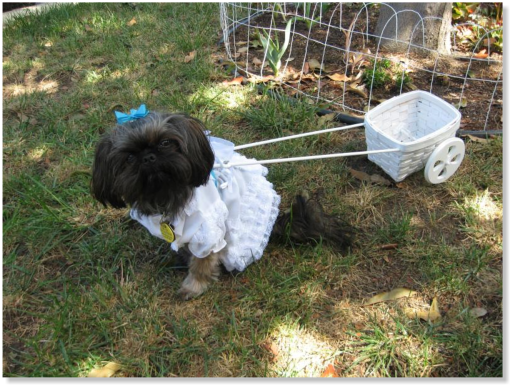
Pawsitively Purfrect Petal Pull Cart

Idea Spotlight - New Startup Pays Experts To Answer Questions


http://www.petpetalpullcart.com/

Sheryl Bass and her husband Neil Cline stumbled on an idea for a business as they were planning their wedding in 2006. Both wanted their dogs to participate in the wedding but didn't want anything that would be uncomfortable to wear or anything that would be toxic. Bass wanted her dog to fulfill the traditional "flower child" role, but no such product existed for the pet to hold the flower petals as they were distributed.

And so, Pawsitively Purrfect Products and its "Pet Petal Pullcart" was created.

It just so happens that Cline is pretty handy, Bass says. After testing various contraptions on their own pet, they came up with a wooden cart that attaches to a harness and dispenses flower petals from the back. The customizable hand-carved pull cart is for small dogs (less than 30 pounds) and sells for $130 on the company's website.

Bass and her husband, who both have full-time jobs as a publicist and psychotherapist, respectively, have hit on an explosive trend -- consumers are expected to spend nearly $53 billion on pets in 2012, according to the American Pet Products Association. Boutique businesses that offer pet outfits, treats (that literally look good enough for humans to eat) and toys are on the rise. And so is the trend of including furry loved ones in weddings.

The Pet Petal Pullcart is so popular that the couple cannot keep up with production (pull carts are made-to-order given the pet's weight and length specifications), Bass says. However, the couple has had to turn away customers, especially those looking to use the product for bigger breeds.

Bass says they hope to license the product, so that a bigger company can mass produce the item and come up with a solution to the big-breed dilemma. She also wants to add other products to the business down the line, she says.

[Via - The Street]

SafetyTats.com Story

How to Make Millions with Your Ideas: An Entrepreneur’s Guide

Crazy Startups - Hangover Bus

How To Sell A Dog For $230,000

From 0 To $30,000 A Month With Dropshipping

Up and down (and up and down) with Baltimore County internet-porn pioneers Jen and Dave

Company Name Ideas

Daily advice link - Designer? We Are Hiring!

Sunday, 15 April 2012

Baseball Cookies A Homerun

Idea Spotlight - New Startup Pays Experts To Answer Questions


http://www.cooperstowncookie.com/

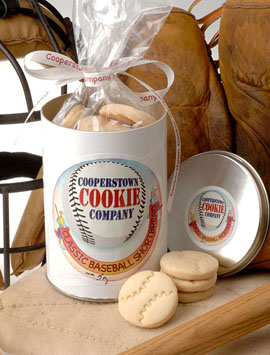
Cracker Jack, peanuts, hot dogs. It almost seems like ballpark food is more exciting than the game itself. And if Pati Grady has anything to do with it, we'll soon be adding shortbread cookies to the list of iconic ballpark snacks.

In 2004, Grady searched online for a baseball cookie cutter to no avail. Improvising, she used a drinking glass to cut rounds out of dough made from her family's shortbread recipe and used a crimping tool to make stitches.

Coincidentally, the cookies were the exact size of MLB regulation baseballs, and Grady sensed that she had the seed for a new business. She incorporated and named the company Cooperstown Cookie, in honor of her hometown and the location of the National Baseball Hall of Fame and Museum.

In 2008, Cooperstown Cookie scored official licenses with Major League Baseball and the Hall of Fame, doubling sales immediately. "It changed everything," Grady said. "And with licenses, the world of wholesale opened up."

Today, she supplies her treats to stadiums across the country, from Busch Stadium in St. Louis to Seattle's Safeco Field. Grady also does a pretty brisk online business, selling cookies packaged in boxes and teams emblazoned with team logos.

[Via - CNNMoney]

SafetyTats.com Story

How to Make Millions with Your Ideas: An Entrepreneur’s Guide

Crazy Startups - Hangover Bus

How To Sell A Dog For $230,000

From 0 To $30,000 A Month With Dropshipping

Up and down (and up and down) with Baltimore County internet-porn pioneers Jen and Dave

Company Name Ideas

Daily advice link - Designer? We Are Hiring!

Wednesday, 11 April 2012

Smart Ideas - Paul Sammut And His Ramos Alarm Clock

Need business name ideas? Visit PickyDomains.com


http://www.paulsammut.com/ramos/

There may be a lucky few who never have trouble getting up in the morning, but for everyone else, engineer and designer Paul Sammut has a new solution. Now fully funded on Kickstarter, Sammut’s new Ramos alarm clock can’t be turned off by any ordinary means; rather, users must get up and walk to an accompanying defuse panel to punch in the clock’s preset deactivation code.

There’s no “snooze” button in easy reach on the Ramos clock, which has been in development for years, Sammut says. “Ramos is a clock I made after I got tired of constantly oversleeping,” he explains. “I needed something that would force me out of bed.” No surprise, then, that the Ramos can only be turned off when the user gets up and enters in a code on a separate wireless defuse panel, which Sammut suggests be placed in the kitchen or bathroom. “You’ll have to use your brain a bit more, which will help wake you up,” he notes. “Best of all, after you turn off the alarm you’ll find yourself in your bathroom or kitchen, away from the evil alluring bed and ready to start your day.” An optional snooze mode will be included, but users won’t be able to exceed the number of “snoozes” they preset in advance.

The Ramos can now be preordered on Kickstarter starting at USD 160, with options including either an LED or nixie tube display and a variety of hardwoods and finishes. Specialty retailers around the globe: one to get in on early?

[Via - Springwise]

Weird Startups - Hangover Bus

From 0 To $30,000 A Month With Dropshipping

10 Strange But Successful Business Ideas To Inspire Your Inner Entrepreneur

How To Sell A Dog For $230,000

Will SproutSocial Become Google Of SMM?

In DC You Can Make Up To $50 An Hour Standing In Line For Others

Porn Industry Isn’t Shy About Using Crowdsourcing

How to Make Millions with Your Ideas: An Entrepreneur’s Guide by Dan S. Kennedy

How To Get Rich Selling Unicorn Meat On Amazon.com

Daily advice link - Designer? We Are Hiring!

Monday, 7 November 2011

Shunpike.Org - The Business Of Art

Site of the day - PickyDomains.com, world's first risk free naming agency


http://www.shunpike.org/

In the drizzly Pacific Northwest, Andy Fife is a rainmaker for the region's thriving arts community. Through Shunpike, a Seattle-based arts organization, he has helped nurture more than 2,500 creative enterprises across Washington, providing a solid financial foundation for the region's most prominent entrepreneurial artists.

So what's his big secret? "We mostly focus on writing a business plan, creating a marketing plan, securing funding, establishing lines of credit," Fife says. "That, itself, could be considered innovative in the art world, where most people aren't trained in the business fundamentals."

"Artists always do badly with money," admits Jennie Shortridge, a Shunpike client and co-founder of Seattle7Writers, a collective of published Pacific Northwest authors. "We just aren't very good with spreadsheets and bank accounts and, frankly, we don't always want to be."

That's where Shunpike comes in, offering two tiers of service for its financially challenged members. "Basically, we're a service hub for all the back-office functions," Fife explains. "Our mission is to handle all of that for them and let them spend their time doing what they do best, which is producing art."

Shunpike's first-tier program offers grant-writing services, tax-exempt 503(c)(3) status and consultation about fundraising, finance and advisory board development for a $100 annual fee and a 7 percent cut of revenue. The second tier, called the Partner Artist program, offers all of the above, plus assistance in bookkeeping, taxes, licensing, permitting, human resources, payroll and insurance. The same $100 annual fee applies, plus 10 percent of revenue.

Even in the shadow of the Great Recession, Shunpike appears to have no shortage of potential clients. A 2010 report by Americans for the Arts said Seattle is home to 4,370 businesses in the "creative industries"--museums, symphonies, architecture, advertising--employing more than 21,000 people.

When Fife joined as executive director in 2007, Shunpike's annual budget was $400,000; today, it's $1.4 million. About 55 percent of these funds come through donations by government agencies, corporations, foundations and individuals, he says. The rest comes from consulting fees and percentages of Partner Artists' revenues. Shunpike, now in its 10th year, has about 115 Partner Artists on its roster.

Providing aid to nonprofits is Shunpike's specialty, but the group also doles out advice to for-profit ventures. Katrina Toft, co-founder and owner of Two Ravens Studio in Tacoma, Wash., sought marketing and financial advice from Shunpike in 2010 when she and her business partners wanted to grow their metalworking business.

"Andy created a diagram for us, explaining how to get bank loans, address environmental concerns and go through the permitting process," Toft says. "We also learned to be open to not just the standard methods of marketing. He gave us great advice on utilizing social media and venturing into Facebook."

"It's so important to learn business skills," says Teresa Thuman, producing artistic director of the nonprofit Sound Theatre Company, a Shunpike Partner Artist since 2006. "We had no real structure when we started, so Shunpike essentially became our business office. They helped out tremendously with grant-writing, licensing and fundraising."

Fife recommended that Sound Theatre eliminate overhead by renting out local theaters. He is also a champion of pooling artists into collectives and raising funds via online crowdsourcing, much the way Kickstarter works, with incremental PayPal donations.

"You might find other organizations that will help support your business, but no one else will support both your business and your artwork," Thuman says. "There's really no other organization like Shunpike."

Soon that may no longer be true. Fife says he may try to export the Shunpike model. "The strength is that it's a very local approach," he says, "but there's no reason it can't be repeated in other cities."

For more unusual ways to make money, visit this site.

* - do you own a business? We'd like to profile your website, too.

[Via - Entrepreneur.Com]

The Million-Dollar Idea in Everyone: Easy New Ways to Make Money from Your Interests, Insights, and Inventions

IdeaSpotting: How to Find Your Next Great Idea

How to Make Millions with Your Ideas: An Entrepreneur's Guide by Dan S. Kennedy

101 Businesses You Can Start With Less Than One Thousand Dollars: For Stay-at-Home Moms & Dads

Make Your Ideas Mean Business

Site of the day - PickyDomains.com, world's first risk free naming agency

Monday, 24 October 2011

City Slips Shoes

Post sponsor - PickyDomains.com, world's first risk free naming agency


http://cityslips.com/

What it does: Sells portable shoes
Founders: Katie Shea, 24, and Susie Levitt, 24 (pictured left to right)
Based: New York
Revenue 2010: $1 million
Revenue 2011 (projected): $1.2 million

After watching countless women walk home barefoot at the end of a long night in heels, New York University finance students Susie Levitt and Katie Shea started a company to make easily portable shoes. Working with contract designers and manufacturers in the U.S. and China, they created a pair of flats that fold up to fit into a pocket-sized zip pouch. When women pop on the shoes, the pouch unfurls into a tote bag to carry the high heels they just shed. The pair began selling CitySlips in 2009 and are now in 500 retailers, including Neiman Marcus, Dillard's, and Bed Bath & Beyond (BBBY). Shea says they have broad appeal: “A 16-year-old leaving her senior prom will grab a pair of CitySlips and put them in her clutch bag, and then there’s my grandmother who will wear them leaving church." Launched with $15,000 in personal savings and a $100,000 private loan, CitySlips sells shoes that retail for $10 to $58, depending on the style and material. Shea says the company turned a profit in 2010 and now has about five independent sales reps, but Shea and Levitt remain the only full-time employees.

For more unusual ways to make money, visit this site.

[Via - BusinessWeek.com]

* - do you own a web-based business? We'd like to profile your website, too.

The Million-Dollar Idea in Everyone: Easy New Ways to Make Money from Your Interests, Insights, and Inventions

IdeaSpotting: How to Find Your Next Great Idea

How to Make Millions with Your Ideas: An Entrepreneur's Guide by Dan S. Kennedy

101 Businesses You Can Start With Less Than One Thousand Dollars: For Stay-at-Home Moms & Dads

Make Your Ideas Mean Business

Post sponsor - PickyDomains.com, world's first risk free naming agency

Wednesday, 12 October 2011

Woman Creates Fashion Line For People With Down Syndrome

Link of the day - If You Sell Links On Your Site, I Will Buy Them Off You


http://www.downsdesigns.com/

When Karen Bowersox’s granddaughter was born with Down syndrome, she saw the challenges her mother faced trying to find clothes that fit her properly. After extensive research she still could not find any clothes made specifically for people with Down syndrome and so took matters into her own hands, launching her own fashion line Downs Designs.

Bowersox’s goal is to produce clothes for people with Down syndrome that suit their body shape as well as being stylish. In 2010, she hired a designer to develop a new size of clothing which she calls “down sizing”. They started with a basic range of adult-size jeans and long-sleeved t-shirts, and used Down syndrome models to ensure the sizing was correct. Many factories were reluctant to produce their designs due to the irregular sizing, but they soon found a willing supplier in China. Sample garments were taken to the National Down Syndrome Conference in Florida, in order to get feedback and make final adjustments. The products proved popular — with easy-to-use fasteners and specific tailoring around the knees and elbows — and are now available to buy via the website. There are full instructions online about taking measurements and calculating sizes, and free phone consultations are available. Sale items start at USD 30 and the range covers adults, teens and kids. Downs Designs have plans to expand with more designs and a range of outerwear.

As we’ve seen many times in the past, personal experience is so often the catalyst for innovative solutions. One to be inspired by!

For more unusual ways to make money, visit this site.

[Via - SpringWise]

The Million-Dollar Idea in Everyone: Easy New Ways to Make Money from Your Interests, Insights, and Inventions

IdeaSpotting: How to Find Your Next Great Idea

How to Make Millions with Your Ideas: An Entrepreneur's Guide by Dan S. Kennedy

101 Businesses You Can Start With Less Than One Thousand Dollars: For Stay-at-Home Moms & Dads

Make Your Ideas Mean Business

Link of the day - If You Sell Links On Your Site, I Will Buy Them Off You

Monday, 6 June 2011

Harrison Harmonicas

Link of the day - If You Sell Links On Your Site, I Will Buy Them Off You


http://www.harrisonharmonicas.com/

The harmonica may seem as American as the blues. But for years, virtually every harmonica in the U.S. was made somewhere else, with Germany's Hohner accounting for most of them. Musicians now have a homegrown alternative. On Feb. 1, Harrison Harmonicas shipped its first batch of products from a workshop in a business incubator in Rockford, Ill. Its B-Radical mouth organ isn't for beginners—the hand-assembled harmonica sells for $180 vs. $25 for a Hohner Blues Bender—but Brad Harrison, the company's founder and president, says his harmonicas are built to last since every one of the 20 brass reeds can be swapped out for a new one. Harrison, 40, decided to start his own factory after 14 years of custom-building harmonicas for such celebrities as Bono and Bruce Willis and a short gig as a consultant in Japan for Suzuki Musical Instruments, which also makes harmonicas. In 2008 he entered entrepreneur competitions in Illinois and won $55,000. Harrison got further assistance from the Rockford campus of Northern Illinois University, which has lent him engineers to help him set up his shop. And he chipped in some $200,000 of his own, from savings and loans. He began taking orders through the company's Web site last year. Harrison Harmonicas now employs a half-dozen engineers and a half-dozen assemblers, who work an eight-hour shift. He hopes to produce and ship 30 to 50 harmonicas a day to start. At that pace, he says, his backlog alone will carry the company until April.

For more unusual ways to make money, visit this site.

[Via - BusinessWeek.Com]

The Million-Dollar Idea in Everyone: Easy New Ways to Make Money from Your Interests, Insights, and Inventions

IdeaSpotting: How to Find Your Next Great Idea

How to Make Millions with Your Ideas: An Entrepreneur's Guide by Dan S. Kennedy

101 Businesses You Can Start With Less Than One Thousand Dollars: For Stay-at-Home Moms & Dads

Make Your Ideas Mean Business

Link of the day - If You Sell Links On Your Site, I Will Buy Them Off You

Friday, 4 March 2011

Underground Signs As Business

Link of the day - If You Sell Links On Your Site, I Will Buy Them Off You


http://www.underground-signs.com/

The Great Recession created a lot of new entrepreneurs: When you're not working, the opportunity cost of launching a new venture is low.

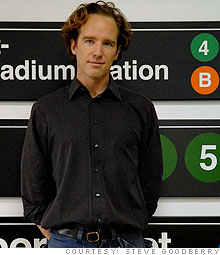
Trevor MacDermid used to be a freelance Web content manager for companies like MasterCard and British Telecom. But in 2009, the gigs stopped coming. Needing something to do, he made a New York City subway sign.

"I like professional signage -- what you see in airports, in factory buildings," says MacDermid, 35. "I am somewhat handy. I just made one for a friend. I thought it was a fun thing."

That first one read "Veranda Place" -- which is a street name, not a real NYC subway stop. MacDermid used computer programs to design the lettering and worked with a tinsmith for the metal.

Then he built his own website to advertise his signs. "It seemed like a good little project, a good weekend project," he says. "Then I just said, well, forget that -- this is what I am going to do."

He mostly works alone out of a studio in the Brooklyn Navy Yards, but he does have to staff up around the holidays. The signs are carried by the New York's Transit Museum shop, a couple of stores in Connecticut, and a baseball memorabilia store. The most popular sign MacDermid sells is for "161st Street -- Yankee Stadium." The runner up: "42nd Street, Grand Central." The signs retail for $99 to $500, depending on the complexity and size.

The venture was profitable in its very first year. MacDermid is licensed with both the NYC MTA and the Boston MBTA, paying a percentage of his sales to the transit authorities because they own the "look and feel" of the signs.

"They are happy and I am happy," MacDermid says. "I am the only officially licensed manufacturer of these signs."

For more unusual ways to make money, visit this site.

[Via - CNNMoney.Com]

The Million-Dollar Idea in Everyone: Easy New Ways to Make Money from Your Interests, Insights, and Inventions

IdeaSpotting: How to Find Your Next Great Idea

How to Make Millions with Your Ideas: An Entrepreneur's Guide by Dan S. Kennedy

101 Businesses You Can Start With Less Than One Thousand Dollars: For Stay-at-Home Moms & Dads

Make Your Ideas Mean Business

Link of the day - If You Sell Links On Your Site, I Will Buy Them Off You

Sunday, 20 February 2011

Buried In Style

Link of the day - If You Sell Links On Your Site, I Will Buy Them Off You


http://www.couturecaskets.com/

"It was just a fluke, actually," Venus Smith says of how Couture Caskets got launched.

A few years back, Smith was in California visiting her brother, a mechanic who appreciates nice cars. They spotted a 1956 Thunderbird -- her brother's favorite.

"We went and sat down and ate some pizza and started talking, and I said, `Man, wouldn't you love to be buried in something like that?'"

That was it. A business was born.

"As soon as I said it, I knew it could be done," says Smith, 42. It took her two years to develop a prototype and get a trademark. Initially Smith wanted to build the caskets out of environmentally sound products, but she ran into too many barriers to making her Couture Caskets eco-friendly.

The company officially opened for business on Nov. 29, 2010. Smith works from home, but has to outsource a lot of the productions steps. She commutes from Pennsylvania to New Jersey to have the caskets painted.

Smith started with caskets for pets, but says her next step will be designer human caskets. She understands that for some, the notion is unsettling: "It is a fresh idea, but it still affects a lot of people in strange ways." Younger people seem to be more into the idea of a Couture Casket, Smith notes.

Thus far, she hasn't sold any caskets.

Retail prices for in-stock pet coffins -- ones shaped like a bone or a house -- start at $395. Custom-made pet caskets go for $995 on up. But that's a bargain compared to a human casket, which Smith expects to sell for a $9,995 entry-level price tag.

"I believe the idea is going to catapult once I have a human casket so that people can see the visual," says Smith, who is working on a Vintage 1966 Shelby Cobra. "Once it catches on, I think it will be like wildfire."

For more unusual ways to make money, visit this site.

[Via - CNNMoney.Com]

The Million-Dollar Idea in Everyone: Easy New Ways to Make Money from Your Interests, Insights, and Inventions

IdeaSpotting: How to Find Your Next Great Idea

How to Make Millions with Your Ideas: An Entrepreneur's Guide by Dan S. Kennedy

101 Businesses You Can Start With Less Than One Thousand Dollars: For Stay-at-Home Moms & Dads

Make Your Ideas Mean Business

Link of the day - If You Sell Links On Your Site, I Will Buy Them Off You

Thursday, 27 January 2011

Two Ways To Profit From Pizza

Link of the day - If You Sell Links On Your Site, I Will Buy Them Off You


http://pizzaacasa.com/

Last year The Village Voice declared Mark Bello's pizza one of the three best in New York City. And it is sensational: a thin, crisp crust paved with the ideal balance of cheese and sauce, finished with fresh basil and a drizzle of top-grade olive oil.

But you can't buy it. You have to make it. And this in a city with more than 1,800 pizzerias.

Bello is the founder of Pizza a Casa, a "pizza self-sufficiency center" on the Lower East Side where he passes on what he's learned over a lifetime obsessing on the perfect pie. Students spend four hours and $150 learning how to make something they could buy--in cheesier form--for about $2 on most street corners. The classes, offered three days a week, sell out so fast he recommends signing up two months in advance; demand is so strong he has started offering pasta sessions as well.

Bello, who is self-taught, had been giving pizza classes around the city and in his own apartment in Chinatown for five years before he decided to literally set up shop, with a kitchen classroom and pizza equipment to sell, from peels to wheels. Student reaction to his personality and his itinerant classes had been so enthusiastic--both word-of-mouth and on online survey sites like Zerve.com--that last April he opened with a waiting list.

Pizza a Casa is a niche business, but Bello notes that more and more Americans are willing to pay to learn to cook at home, especially in this economy. And hands-on is a better way to learn than watching television or reading a cookbook. "Simple food is not easy, and aspiring pizza-makers know that," he says.

Using his arts background--he has a master's degree in sculpture from the School of the Art Institute of Chicago--Bello designed every inch of the stylish 450-square-foot space. There's a trestle table down the center outfitted with a marble slab for each of as many as 16 students and a tiny station in one corner where he can demonstrate his "deejay-twist" action to stretch dough and have it telecast by "dough cam" onto the overhead screen next to the home-style ovens.

Bello opened on a Manhattan shoestring: less than $150,000 from a furniture business he started after grad school and turned over to a partner. He also says he was "not afraid to pick up a power tool" or to barter like crazy. One example: "I wanted to show you can make pizza in any oven," so he presented his business plan to the Viking appliance company and persuaded it to donate equipment.

Bello chose the right location, too, on the same block as the famous Kossar's Bialys shop and the Doughnut Plant, which draws tourists even from Japan. Then he let former students and friends in the media spread the word.

More than 1,000 students have baked their way through Pizza a Casa, turning out 2,300-plus pizzas. Friends of former students and repeat students who bring friends and family typically make up a majority of the classes.

"Most of my students have never touched flour in their lives," the New York City native says. But Bello also has taught restaurateurs, some from as far away as Turkey and Paraguay, who want to "up their pizza game."

Bello has a book proposal in the works and says expansion is a possibility, too. But for now, "the class is dependent on me," he says. "I don't want to make it cookie-cutter."

For more unusual ways to make money, visit this site.

[Via - Entrepreneur]

The Million-Dollar Idea in Everyone: Easy New Ways to Make Money from Your Interests, Insights, and Inventions

IdeaSpotting: How to Find Your Next Great Idea

How to Make Millions with Your Ideas: An Entrepreneur's Guide by Dan S. Kennedy

101 Businesses You Can Start With Less Than One Thousand Dollars: For Stay-at-Home Moms & Dads

Make Your Ideas Mean Business

Link of the day - If You Sell Links On Your Site, I Will Buy Them Off You

Monday, 30 August 2010

Kafka's Kool Ties

Link of the day - If You Sell Links On Your Site, I Will Buy Them Off You


http://www.kooltie.com/

Years ago, a friend presented Phoenix business owner Steve Kafka with polymer crystals that were used on golf-course grass to allow it to absorb nitrates.

But the turning point was when the friend showed Kafka how incredibly absorbent the material was when introduced to water.

"He said, 'If anyone can do something with this, you can,'" Kafka said.

Kafka and his wife, Pam, put their ingenuity and artistic creativity to work, sewed the polymer into high-quality fabric, fashioned it into a scarf and in 1991, Kafka's Kool Tie was born.

After the tie is soaked and the polymer crystals absorb the water, it stabilizes body temperature through evaporation when placed by the carotid arteries and major vascular networks, such as those at the back of the neck. It also stabilizes blood pressure.

Nearly 20 years and countless competitors' knock-offs later, Kafka's creation has gained a loyal following of medical professionals, government public-service departments and patients suffering from heat-related ailments.

The Kool Tie remains a popular item on the shelves at national outdoors store REI. The continuous cooling effect lasts up to three days, and unlike similar devices, the tie does not have to be frozen to be, two features that are attractive to hikers, said Chad Vincent, manager of the REI store in Paradise Valley. Vincent said the ties become more popular as Arizonans ease into the summer.

"It's not like a spray bottle where you have to be active in using them. It's an easy tool you put on and let it do its work. It's not something you have to put a lot of energy into to stay cool," he said.

When Kafka started Kool Ties, the Boston native was already a well-known artist whose pinstriping garnered international attention on the vehicle road circuit. He saw other freeze-and-wear products that were designed to cool down the body but instead resulted in iciness that often caused more discomfort or frostbite.

Pam, who is in charge of manufacturing and design, made the first 3,500 Kool Ties in her home sewing room. Professional athletes, weekend warriors, policemen and firefighters are among Kafka's regular clients.

Kafka says there are some poor imitations on the market, but he takes it in stride and focuses on making his product the best it can be.

"People say those things don't work . . . until they get one of ours," he said. "We love and feed off the calls and e-mails we get every day."

For more unusual ways to make money, visit this site.

[Via - AZCentral.Com]

The Million-Dollar Idea in Everyone: Easy New Ways to Make Money from Your Interests, Insights, and Inventions

IdeaSpotting: How to Find Your Next Great Idea

How to Make Millions with Your Ideas: An Entrepreneur's Guide by Dan S. Kennedy

101 Businesses You Can Start With Less Than One Thousand Dollars: For Stay-at-Home Moms & Dads

Make Your Ideas Mean Business

Link of the day - If You Sell Links On Your Site, I Will Buy Them Off You

Friday, 27 August 2010

Spritit Hoods

Link of the day - If You Sell Links On Your Site, I Will Buy Them Off You


http://spirithoods.com/

Entrepreneur: Alexander Mendeluk, a sometime-actor with bit parts in the Twilight movies (he's the one Kristen Stewart kneed in the groin).

"Aha" moment: Mendeluk sported the bobcat to a Hollywood party in 2009. "The entire place just stopped," he says. Soon, a gaggle of girls began petting the hood and "I was, like, 'Ohmigod. This could be something cool.'"
What possessed him: In film school at the Art Institute of Portland, Ore., Mendeluk was looking for a way to truly stand out, so he and a designer friend came up with the idea of a bobcat hood. Mendeluk began making them for his friends and noticed how cool it looked when his crew all wore theirs at the same time. A tribe was born.

Startup: Mendeluk partnered with friends Chase Hamilton, Ashley Haber and Marley Marotta, and Hamilton put in $10,000 to create prototypes and pay for a booth at February's Pooltradeshow in Las Vegas, where the brand officially launched.

Payoff: Between the e-commerce site and 40-plus accounts in the United States, Canada and Japan, "we are moving thousands of units." The hoods' popularity has prompted manufacturing to expand from Los Angeles to include China. Seventeen styles are available, from a $69 brown bear ("brave, curious, gentle") to a $129 red fox ("adaptability, diplomacy, wisdom"), paws included.

2011 and beyond: A line of kid-sized hoods and a new tribe across the pond, when Mendeluk's brother, a former ad man with Leo Burnett, opens a Spirit Hoods office in London.

For more unusual ways to make money, visit this site.

[Via - Entrepreneur Magazine]

The Million-Dollar Idea in Everyone: Easy New Ways to Make Money from Your Interests, Insights, and Inventions

IdeaSpotting: How to Find Your Next Great Idea

How to Make Millions with Your Ideas: An Entrepreneur's Guide by Dan S. Kennedy

101 Businesses You Can Start With Less Than One Thousand Dollars: For Stay-at-Home Moms & Dads

Make Your Ideas Mean Business

Link of the day - If You Sell Links On Your Site, I Will Buy Them Off You

Thursday, 26 August 2010

Young Millionaires

Link of the day - If You Sell Links On Your Site, I Will Buy Them Off You


http://www.modcloth.com/

Susan Gregg was 17 and heading off to Carnegie Mellon University, and she had a problem: a closet overstuffed with one-of-a-kind vintage shoes and dresses. The solution? Open an online boutique.

ModCloth.com was headquartered in her dorm room and run with the help of her high school sweetheart, Eric Koger. The two drove from Pittsburgh to their South Florida hometown several times throughout college to haul up stock. By the end of their senior year in 2006, ModCloth was getting 60,000 visitors a month, and plenty of them were asking for more.

Gregg--a double major in German and business, and now married to Koger--knew what to do. First, she raised the capital: $50,000 in credit card debt, plus loans from Koger's uncles, student loans and a second mortgage. Then she hired designers to create an original, vintage-inspired collection. "I Googled, 'Where can I buy wholesale clothing?'" Gregg-Koger recalls. She found the Magic Trade Show in Las Vegas, wandered the booths, asked questions and found her designers.

These days, as co-founder and chief creative officer, Gregg-Koger, 25, still handpicks all the clothes, shoes and accessories featured on the site (most sell for less than $100) and seeks out designers who fit ModCloth's aesthetic. Koger, the CEO, oversees the technical side. The site gets around 2 million visitors every month and is on track to surpass $50 million in sales this year. They've raised $20 million in new funding to open up offices in San Francisco and Los Angeles this summer, and employee numbers are close to 150, and rising.

Gregg-Koger says ModCloth's biggest advantage is the fact that she is ModCloth's ideal customer: "Other companies might say, 'We need to get on this social networking stuff,' whereas it was intuitive for us. If I have a Facebook account, and my friends do, my business should."

ModCloth's future is "social commerce," she adds. That is, in developing a site that involves customers even if they're not actually buying. ModCloth recently introduced a "Be the Buyer" program, which lets customers choose which styles go into production, and a "Name It and Win It" contest. The idea is to leverage crowdsourcing and encourage customers to share and comment--and get excited about clothes that will be available in a few months.

"But that's like version 0.5," she says. "There's a lot more coming."

For more unusual ways to make money, visit this site.

[Via - Entrepreneur Magazine]

The Million-Dollar Idea in Everyone: Easy New Ways to Make Money from Your Interests, Insights, and Inventions

IdeaSpotting: How to Find Your Next Great Idea

How to Make Millions with Your Ideas: An Entrepreneur's Guide by Dan S. Kennedy

101 Businesses You Can Start With Less Than One Thousand Dollars: For Stay-at-Home Moms & Dads

Make Your Ideas Mean Business

Link of the day - If You Sell Links On Your Site, I Will Buy Them Off You

Tuesday, 27 July 2010

The Butch Bakery - Boozy, Manly, Camouflage-Frosted Cupcake

Link of the day - If You Sell Links On Your Site, I Will Buy Them Off You


http://www.butchbakery.com/

Entrepreneur: David Arrick, laid-off commercial real estate attorney and former celebrity trainer, now founder of Butch Bakery, an online Manhattan cupcakery

Idea: Cupcakes for men. "We stay away from pastels and sprinkles," Arrick says. Hence the "Driller," a maple cupcake smothered with crumbled bacon and chocolate ganache; the "B-52," a Kahlua-soaked cupcake sporting a camouflage topping and the "Beer Run," a chocolate-beer cupcake with beer-infused buttercream and crushed pretzel sprinkles. Can't decide? The "Butch Box" holds all 12 flavors for $48, plus $8 delivery.

"Aha" Moment: Walking past the long line of people waiting for frilly cupcakes at Magnolia Bakery in Manhattan, the cupcake craze's ground zero. Two thoughts ran through Arrick's head: "I gotta get on that bandwagon" and "Where's the boy bakery?"

StartUp: Arrick cashed out his 401(k) and ran up credit cards to the tune of $25,000. He worked with bakers and consultants to create recipes and focused on building a strong online presence. "It's the biggest risk I've ever taken, but I've reached an age where the worst that could happen doesn't sound that scary."

Payoff: Original sales projection: $5,000 a month. By year's end, the bakery should net more than $10,000 a month. "I think it's OK to say that we're on the other side of the ‘Why didn't I think of that?' fence."

Customers: 90 percent women. "I've tapped into the ‘What do you get for a guy?' market."

Work philosophy: "It's just cupcakes. Relax."

Media Love: A cupcake cookbook deal with John Wiley & Sons, slated for release next year, with 50 "guy friendly" (read: easy) recipes for manly occasions (football season, barbecues, spring training…). On deck: A reality show pilot with MY-Tupelo Entertainment. The concept: "Guy reinvents himself through a bakery."

2011 and Beyond: Develop a masculine baking brand, start shipping nationwide, open Butch Bakeries in Chicago, Boston, L.A., San Francisco and Miami; ultimately, "I'll be a cross between Rachael Ray and Guy Fieri."

For more unusual ways to make money, visit this site.

[Via - Entrepreneur]

The Million-Dollar Idea in Everyone: Easy New Ways to Make Money from Your Interests, Insights, and Inventions

IdeaSpotting: How to Find Your Next Great Idea

How to Make Millions with Your Ideas: An Entrepreneur's Guide by Dan S. Kennedy

101 Businesses You Can Start With Less Than One Thousand Dollars: For Stay-at-Home Moms & Dads

Make Your Ideas Mean Business

Link of the day - If You Sell Links On Your Site, I Will Buy Them Off You